Phonological awareness skills are often taught to support reading and spelling.
But…did you know that some PA skills can directly support reading comprehension as well?
Wait, what?
It’s true! One of the first skills we work on with students is sentence segmenting. Breaking sentences into individual words may seem super simple, but it’s not. Have you ever heard someone speaking a different language? It is difficult to know where one word ends and another begins! This same thing can happen with students learning to read and write. It is important that students know how to do this because…
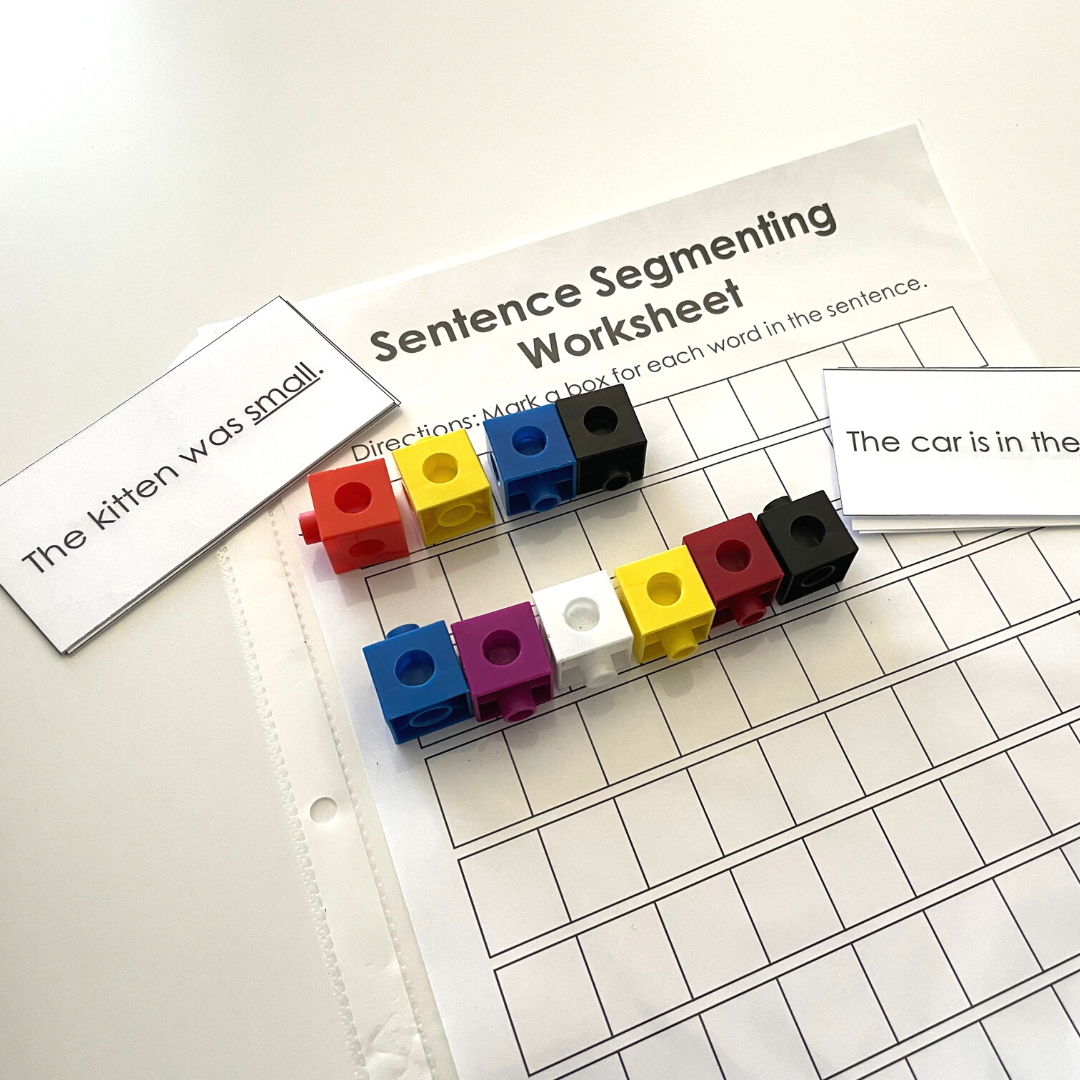
Sentence segmenting helps students with higher-level reading and writing skills.
At a basic level, it helps us know where to put spaces in our sentences. Imagine trying to write a sentence if you couldn’t tell where one word ended and the others began.
At a deeper level, sentence segmenting requires a great deal of working memory. In order to support students’ ability to hold onto sentences in memory, it is important to teach them to break down sentences.
When we break sentences down, we want to break them into…

a subject (who/what),
a predicate (did what),
and an adverbial phrase (why, when, where, or how).
This simple strategy will help…
improve short-term working memory
understand sentence structure
build listening & reading comprehension
improve written sentence structure
When students can hold onto the key information in a sentence, it helps them understand it.
Students need to be able to segment sentences for both writing AND comprehension.
Final Thoughts
Sentence segmenting may seem like a simple skill, but it can make a real difference in how students understand and write sentences. When students learn to break a sentence into meaningful parts, they have more support for holding onto information, understanding sentence structure, and making sense of what they read.
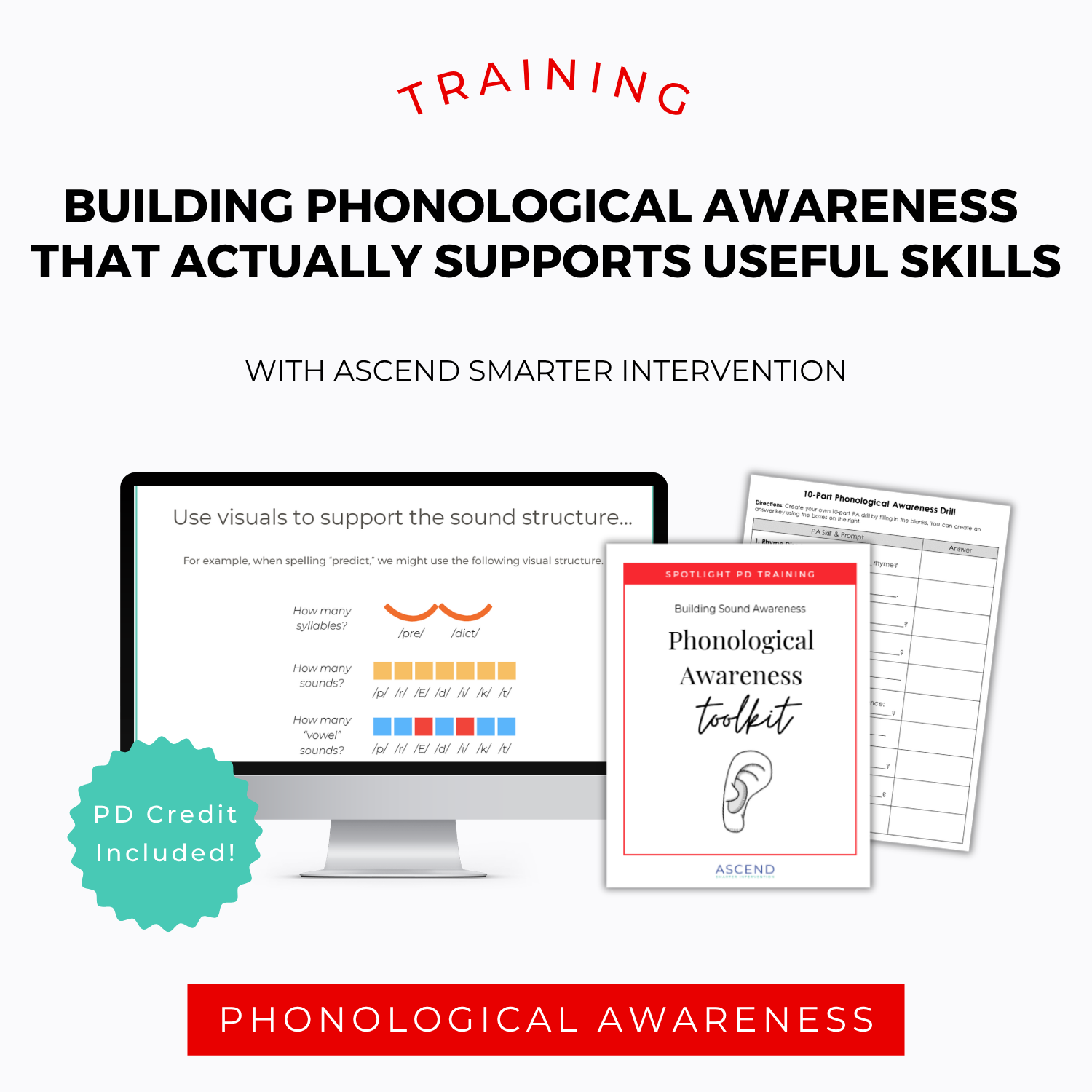
The challenge is finding a way to teach these skills consistently without taking time away from the rest of your literacy instruction. Our on-demand training, Building Phonological Awareness that Actually Supports Useful Skills, shows you how to choose the right skills for your students and build a short, flexible routine into the reading and spelling instruction you’re already doing. You’ll see the routine modeled with a real student and learn how to connect phonological awareness to meaningful reading and writing work.
You’ll also receive the Phonological Awareness Toolkit, including an editable 10-Part PA Drill, task cards, games and activities for differentiating instruction, progress-monitoring records, grade-level benchmarks, and “Creating the PA Bridge” guides that connect phonological awareness to reading and spelling. The training includes a one-hour PD certificate and lifetime access to the training and materials, so you can revisit them as your students’ needs change.