
Bring Clarity, Structure, and Confidence to Your Literacy Instruction
On-demand Spotlight PDs designed to help bring clarity with simple literacy routines, implement structured literacy, and make confident, data-informed decisions without overwhelm.
Find the right PD for you.
→ If you’re just getting started with structured literacy (or want to dive deeper into a specific instructional routine), start with the Reading Rules We Teach or trainings related to executive functioning, phonological awareness, phonics, vocabulary, fluency, comprehension, or writing. They will give you great foundations and simple routines you can implement with students right away.
→ If you’re looking to understand how to put together a structured literacy intervention lesson, take a look at our free Spotlight PDs all about How to Structure Elementary Literacy Intervention, or if you’re working with secondary students, check out Inside a Secondary Literacy Intervention Lesson.
→ If you’re looking to turn your literacy data into action, jump into our Data to Decisions or the Progress Monitoring Spotlight PD.

Search:
Sort by Category:
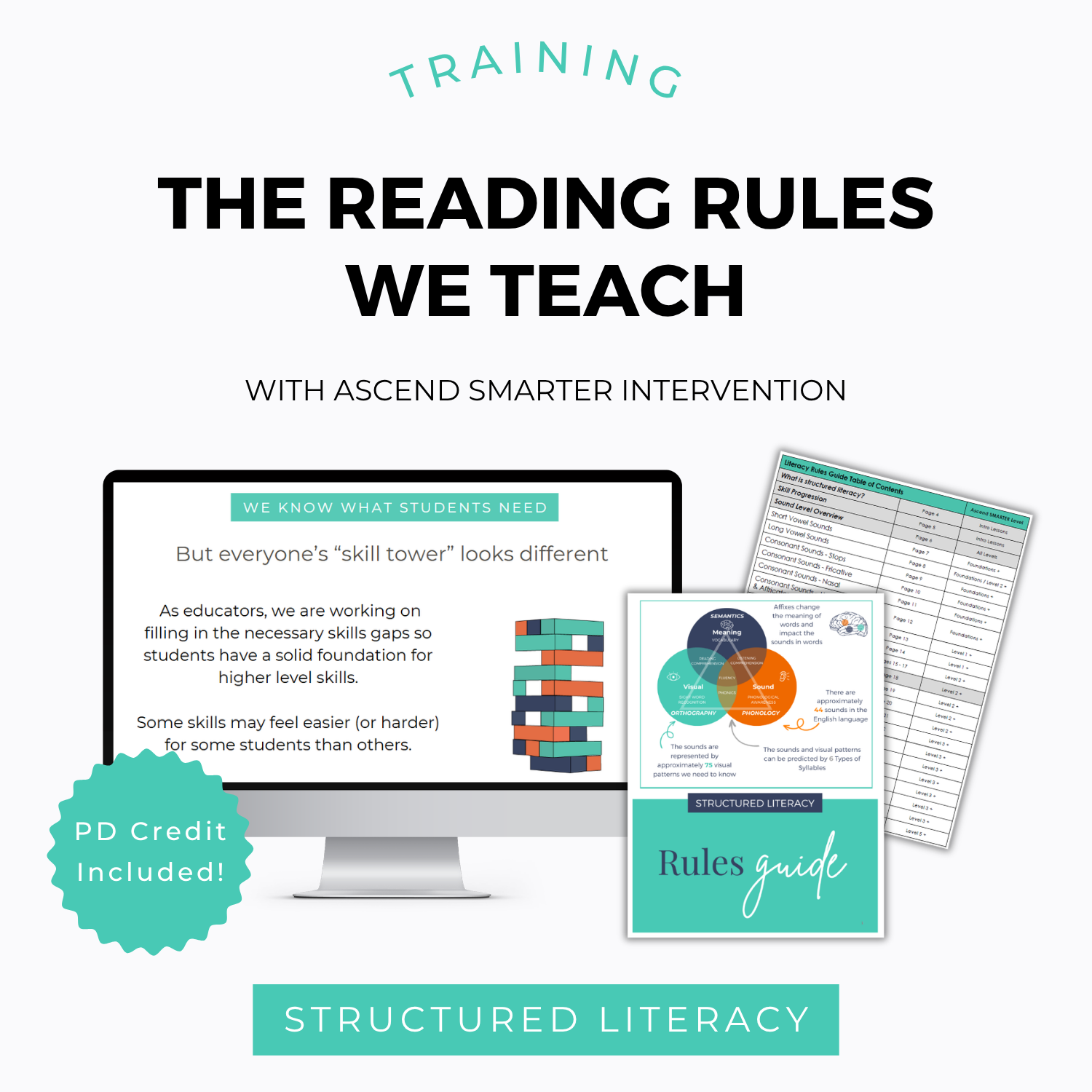
The Reading Rules We Teach (and Why They Matter)
In this practical, engaging training, you'll learn exactly which reading rules matter most, why they’re essential for student success, and how to teach them effectively across grade levels. Whether you’re just getting started or refining your structured literacy approach, this session will give you the roadmap—and the motivation—you need to make a lasting impact.

Supporting Executive Functioning Through the Grade Levels
If your literacy block feels rushed, inconsistent, or harder to manage than it should, executive functioning may be the missing foundation. In this Spotlight PD, you’ll learn a clear, step-by-step framework for strengthening organization, attention, working memory, and self-regulation across grade levels. These evidence-based strategies are designed to integrate into daily instruction, helping students engage more independently and creating calmer, more focused learning environments.
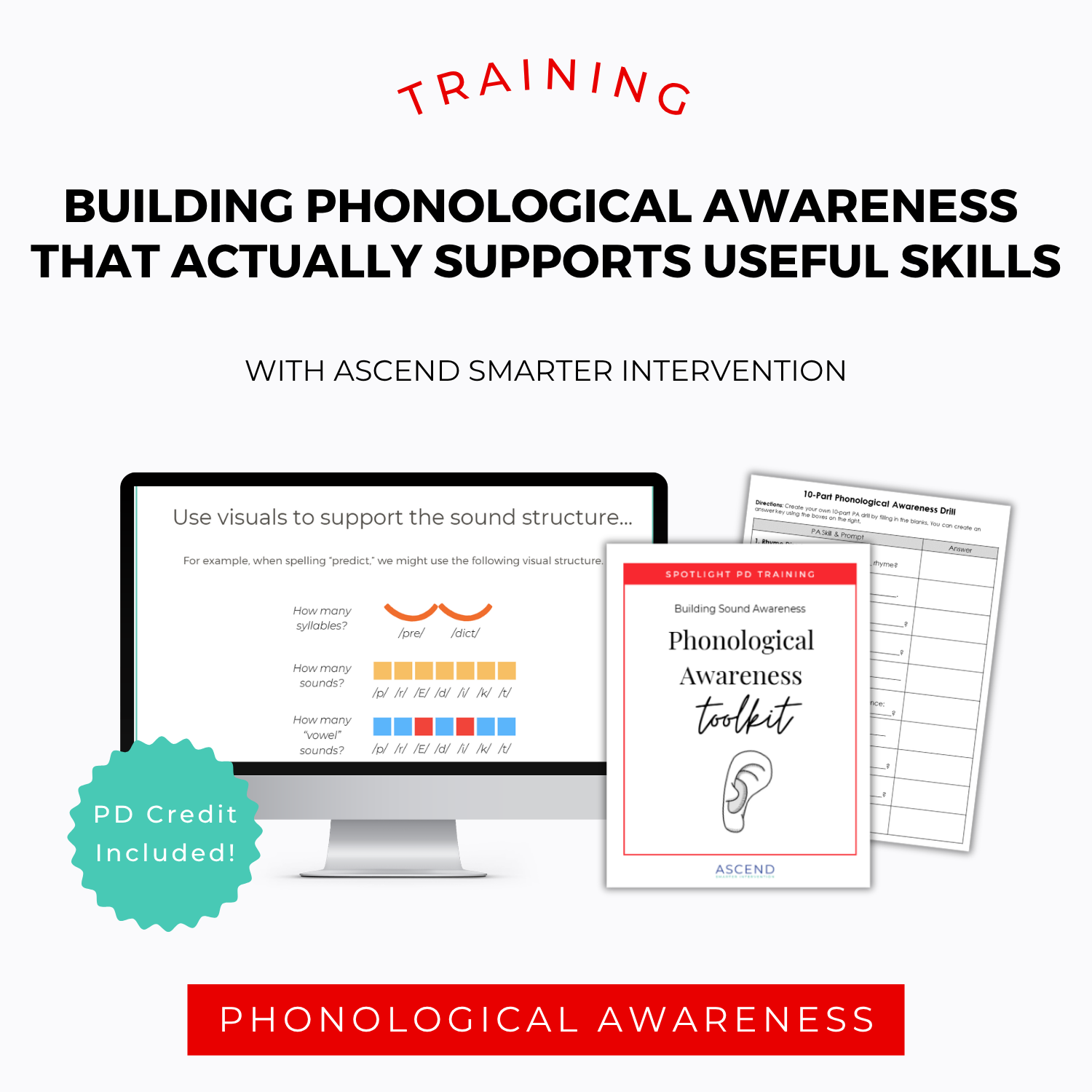
Building Phonological Awareness that Actually Supports Useful Skills
There's been a lot of debate about phonological awareness: how much to teach it, which skills matter, and whether it's even worth the time past the early grades. This training cuts through the noise. It walks you through the four core phonological awareness skill sets, shows you how to target the right ones based on the outcome you're after, and gives you a simple, customizable routine you can build into the reading you're already doing. Most importantly, it shows you how to connect sound awareness directly to reading and spelling, which is the bridge most students never build on their own.
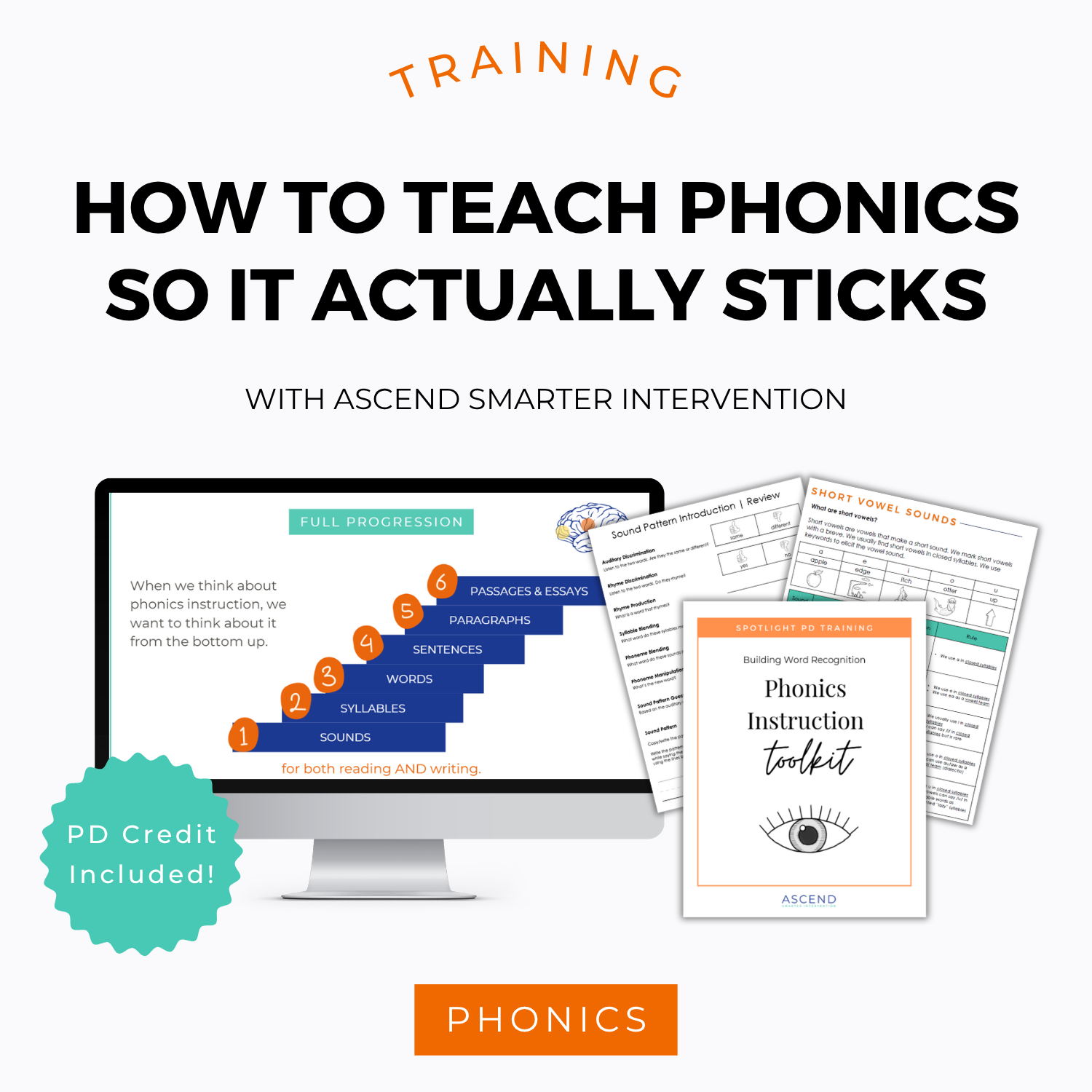
How To Teach Phonics So It Actually Sticks
You've taught the pattern. You've done the sound drill. You've pulled a worksheet of words that match. Your students did fine on it.
You've been doing the work. You've been giving the explicit instruction. But somewhere between the lesson and real reading and writing, the pattern stops carrying over.
It's frustrating because phonics is the part of literacy instruction with the clearest research base. It feels like it should be the most reliable piece, and most of the time it just isn't.
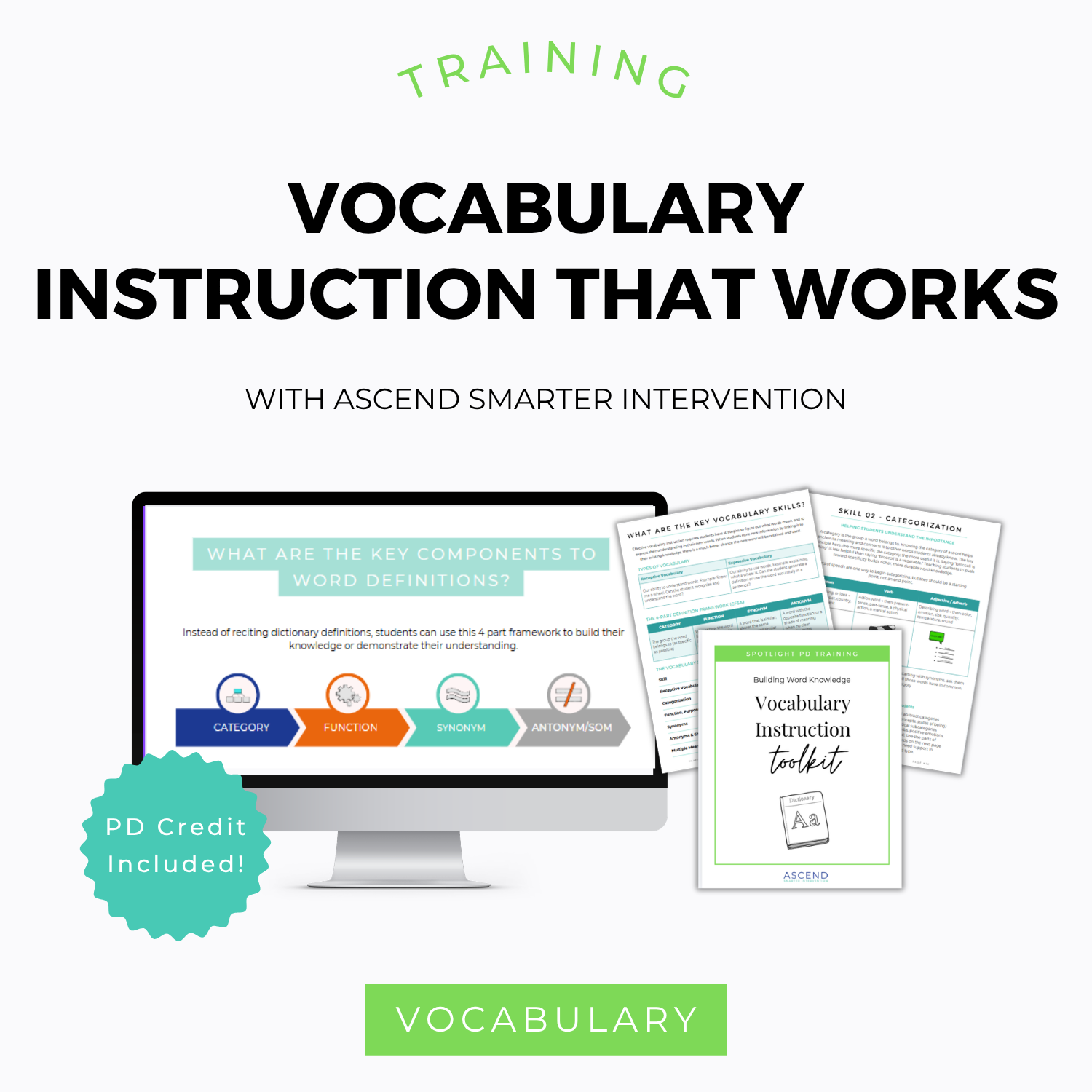
Vocabulary Instruction That Works
This training gives you a clear, repeatable framework for teaching vocabulary in a way that actually sticks. Instead of having students memorize definitions and move on, you'll learn how to use a four-part definition framework (Category, Function/Purpose/Features, Synonym, and Antonym) to build the kind of deep word knowledge that supports reading comprehension and written expression. You'll see how to integrate vocabulary instruction into the lessons you're already teaching, without adding a separate block or separate curriculum, and how to help students begin to self-monitor their own vocabulary understanding so they can catch and work through gaps on their own.
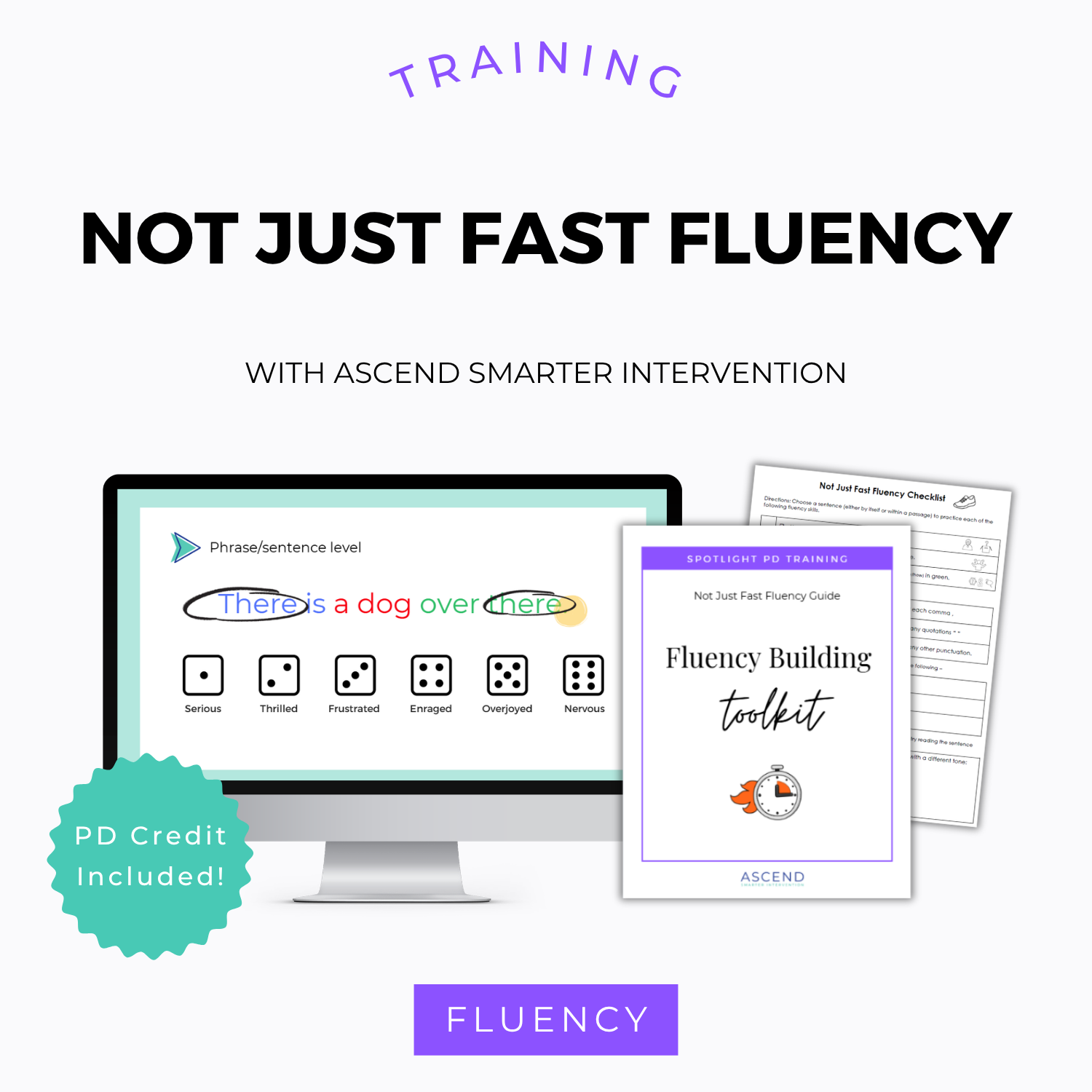
Not Just Fast Fluency: Building Reading Fluency That Supports Comprehension
If you know that developing reading fluency is important, but are looking for some new ways to support your fluency instruction, you’re in the right place. We will dive into why reading fluency isn’t just about reading fast, and what you can do to help support fluency across different levels of ability.
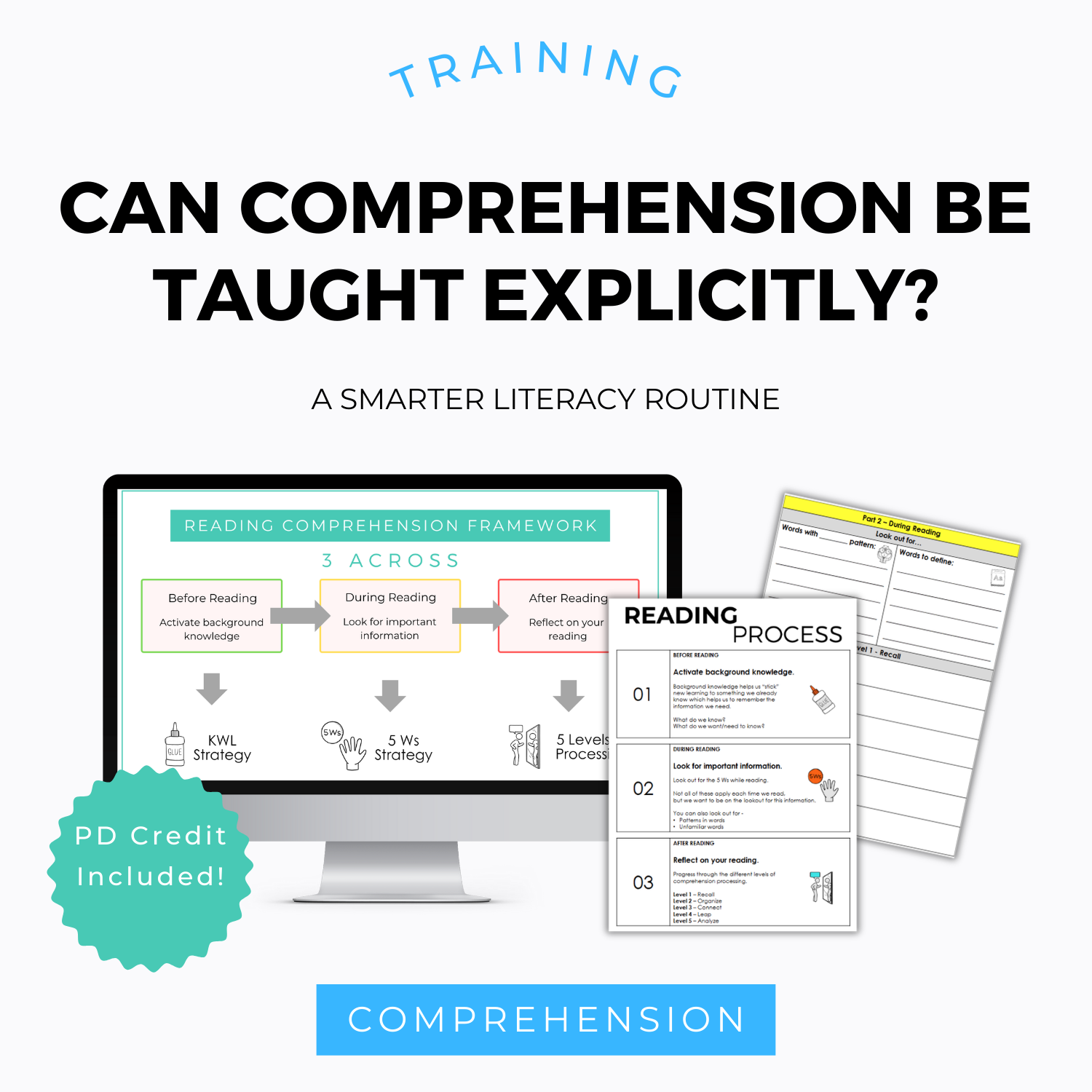
Can Comprehension Be Taught Explicitly?
Comprehension doesn’t have to feel like guesswork.
This training introduces a clear, explicit routine for teaching comprehension that helps students see how ideas fit together, and helps teachers identify where understanding starts to fall apart. If comprehension instruction has ever felt like “read, ask questions, and hope for the best,” this session will help you bring more clarity and intention to that work.
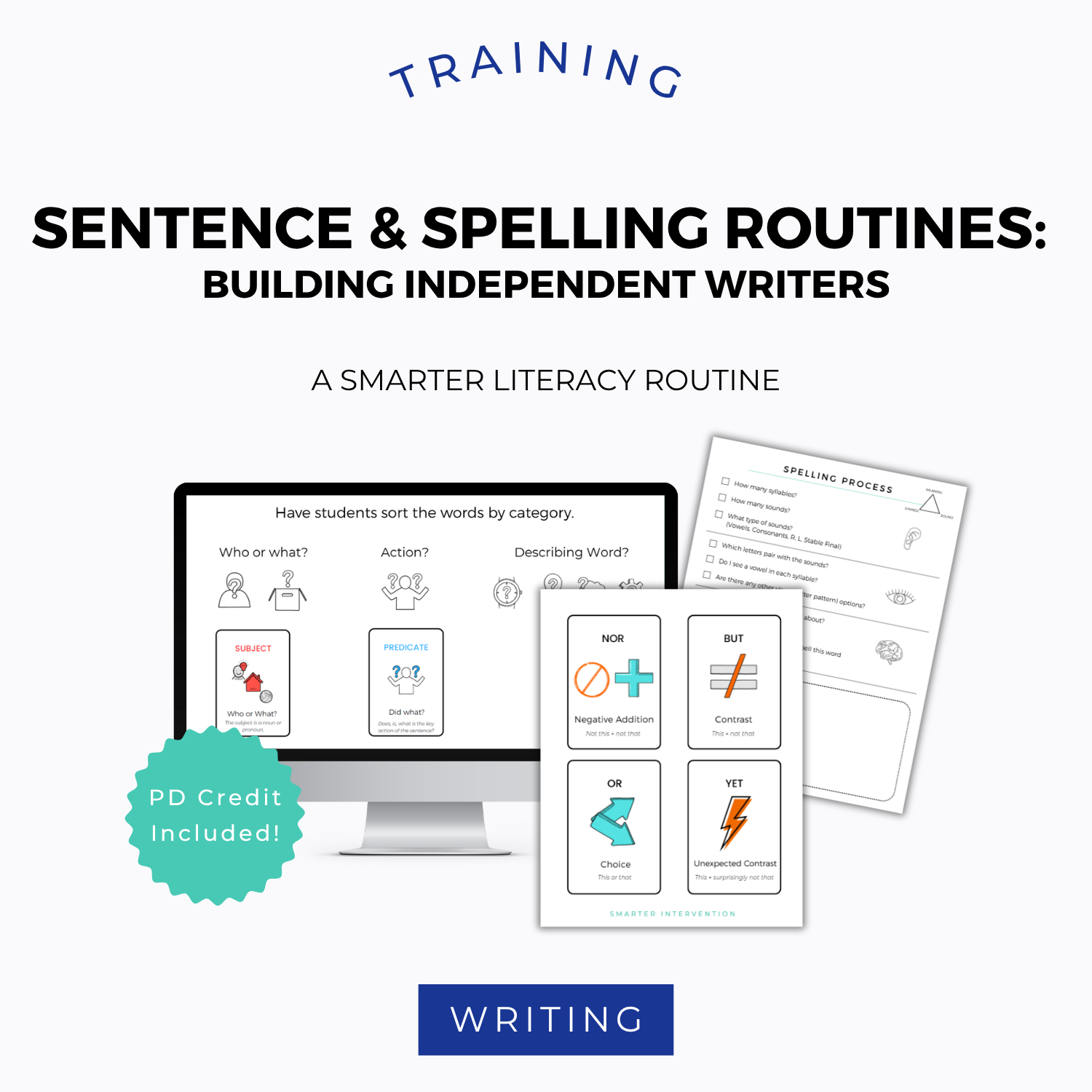
Are your students struggling to write effective sentences?
Students know their phonics patterns. They can identify parts of speech. They’ve practiced grammar worksheets. But when it’s time to actually write... the sentences fall apart.
Run-ons. Fragments. Ideas that are all over the place. Spelling that doesn’t reflect what they’ve been taught. And when you ask them to “edit,” they read it once, change a period, and call it done.
It’s not that they haven’t been taught. It’s that they don’t have a clear, repeatable process for putting it all together.
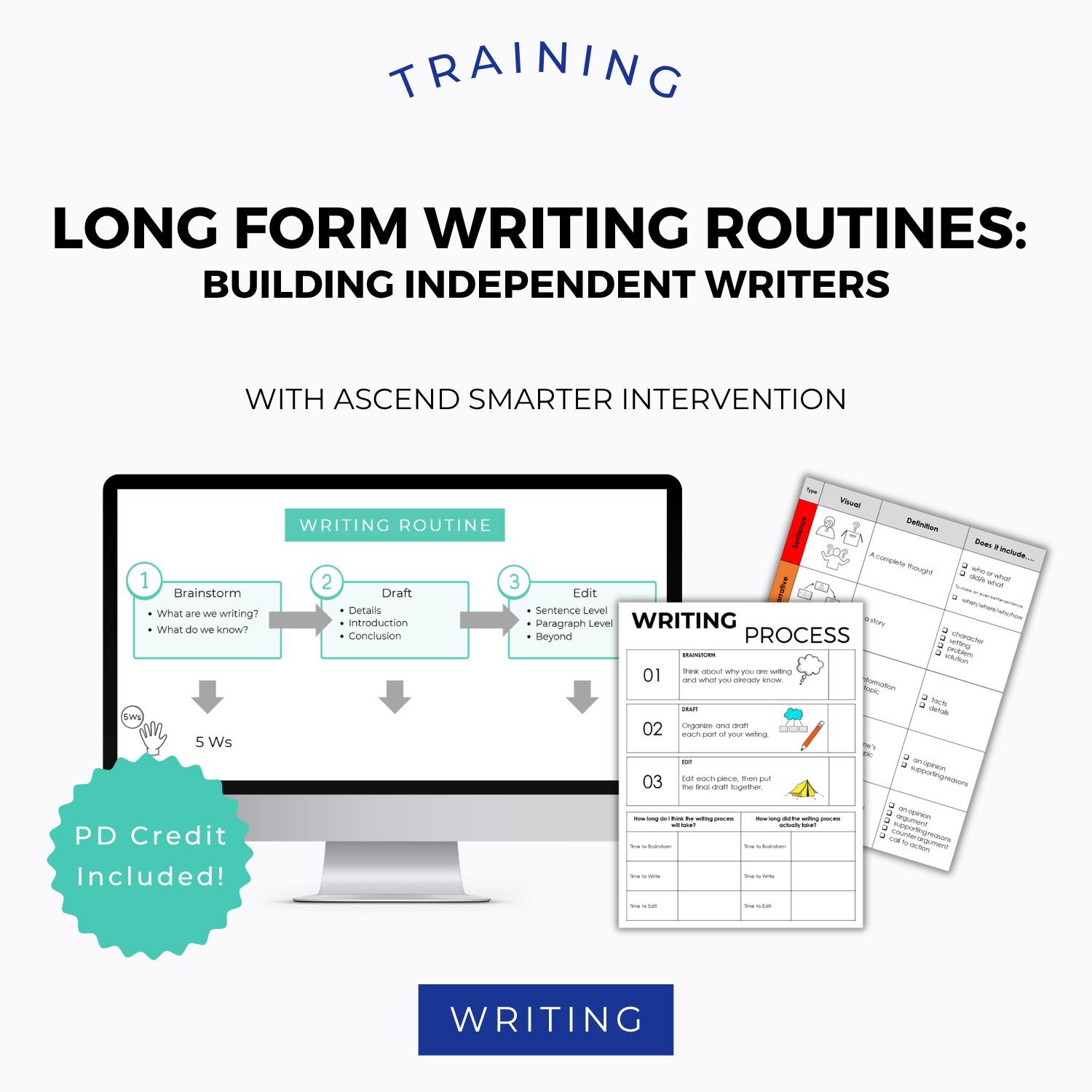
Brainstorm. Draft. Edit. Sound familiar?
You've probably heard of these steps. Your students probably have too. But this training isn't really about the steps; it's about what students do when they get stuck and how to give them a writing process they can actually use on their own.
This 1-hour on-demand PD on long-form writing routines for K–6 teachers will help students plan, draft, and edit independently without losing voice or structure.
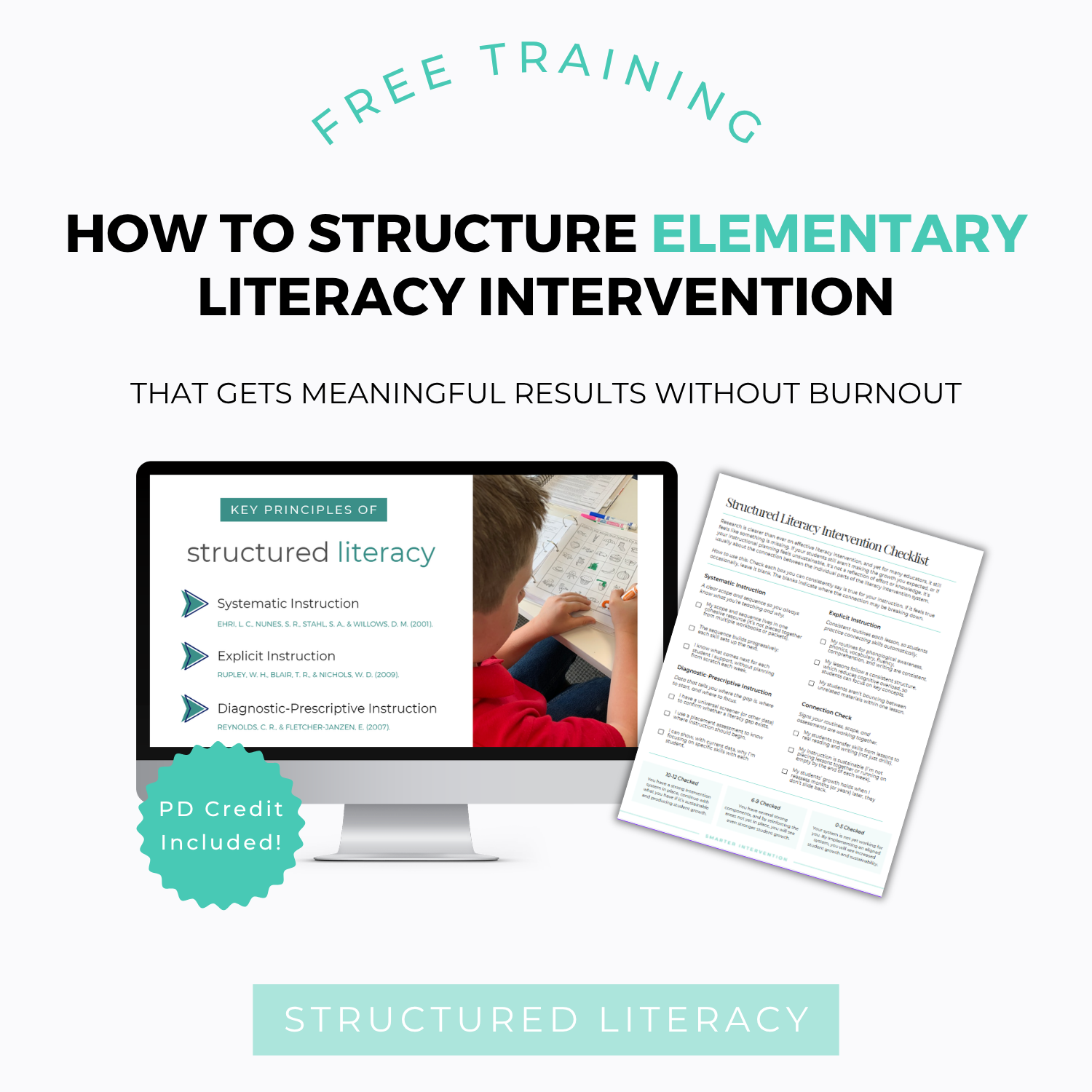
How to Structure Elementary Literacy Intervention
Elevate your intervention game with Ascend SMARTER Intervention’s FREE on-demand professional development designed specifically for elementary educators. In just 1 hour, you’ll discover a research-backed, structured framework rooted in the science of reading and structured literacy
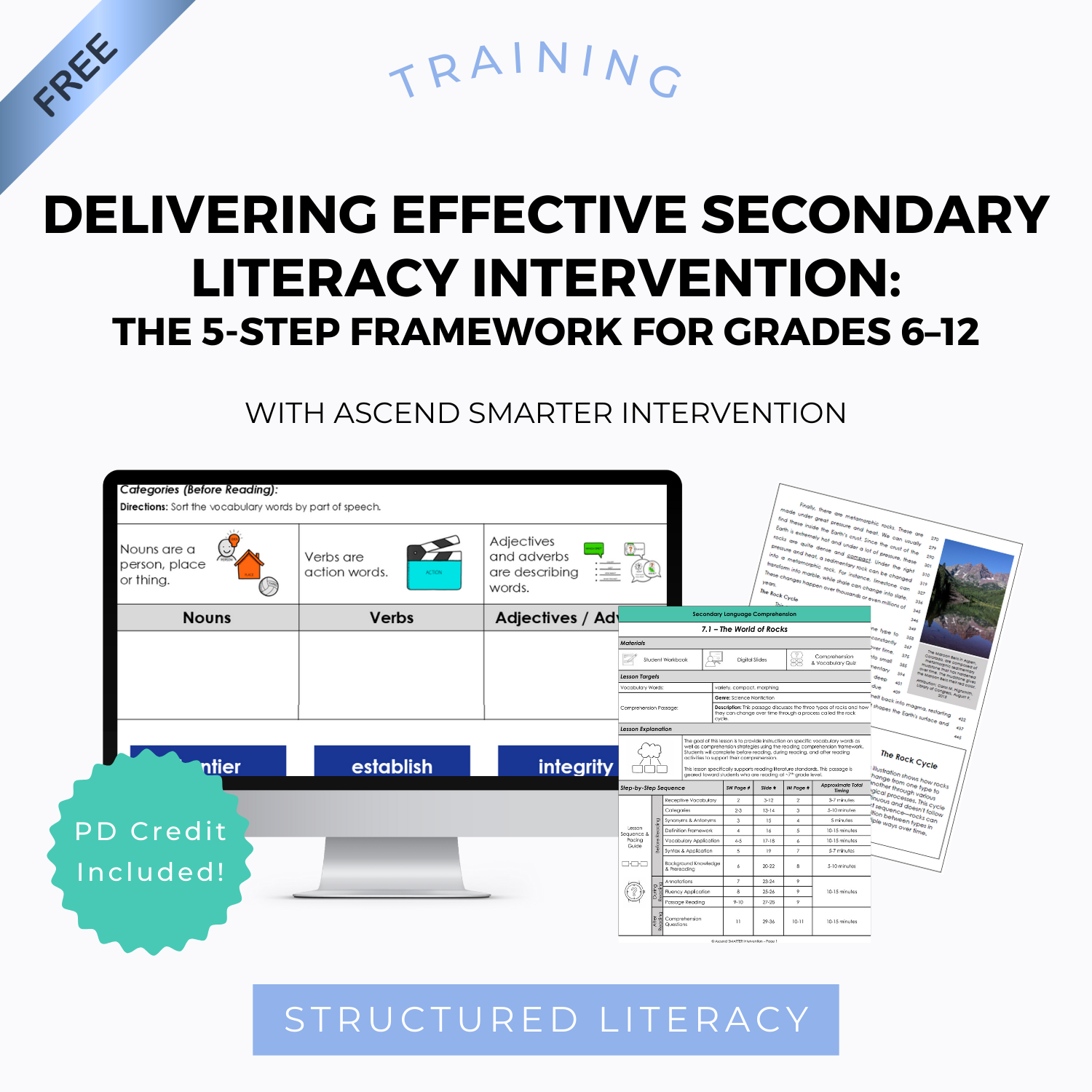
Inside a Secondary Literacy Intervention Lesson
Elevate your intervention game with Ascend SMARTER Intervention’s FREE on-demand professional development designed specifically for secondary educators. In just 1 hour, you’ll discover a research-backed, structured framework rooted in the science of reading and structured literacy

From Data to Decisions: A Framework for Targeted Instruction
Tired of staring at student data and not knowing what to do next? This high-impact training gives you a simple, actionable framework to confidently interpret data and design instruction that actually meets student needs. Whether you're in a classroom, intervention group, or private practice, you’ll walk away with the tools to turn numbers into next steps.

Progress Monitoring Made Simple: How to Set Goals and Track What Matters
This training is all about making reading growth visible without adding hours to your day. Whether you’re tracking student progress for small group instruction, Tier 2 intervention, or IEP goals, this training walks you through simple strategies and tools—including our customizable Google Sheets progress tracker with built-in graphs. Learn how to use your daily lessons and student responses to guide instruction, communicate progress, and confidently answer the question, “Is this working?”

What Dyslexia Really Looks Like: From Identification to Intervention
Learn the fundamentals of dyslexia, including common signs, misconceptions, and the impact it can have on students’ learning experiences. Gain practical strategies to build awareness and learn the three things we must do to support students with dyslexia.
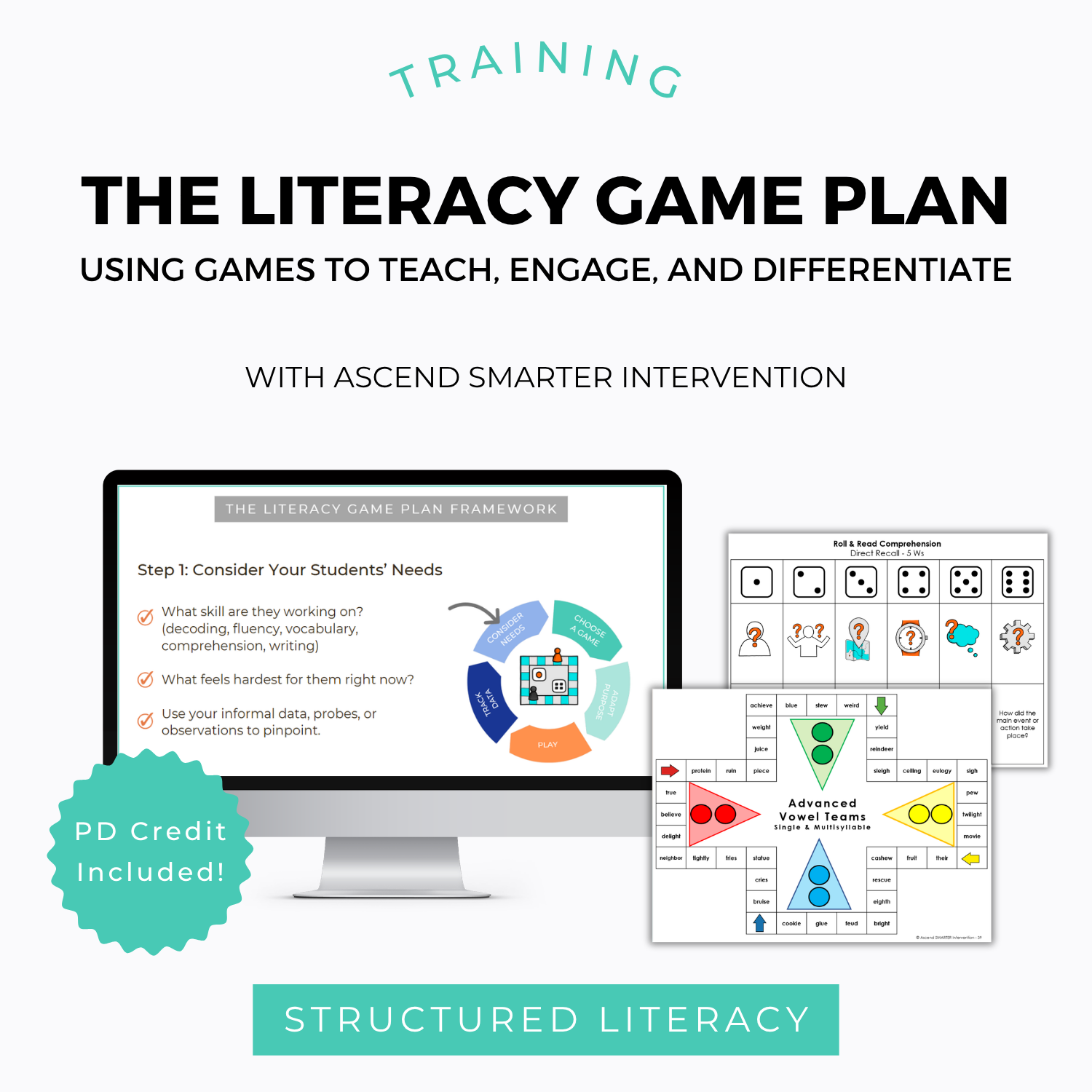
The Literacy Game Plan: Using Games to Teach, Engage, and Differentiate
The Literacy Game Plan is your go-to guide for using games to make literacy instruction more effective and more fun. In this training, we’ll walk you through how to intentionally use games to target specific reading and language skills, keep students engaged, and make differentiation simple. You’ll see how just one game can be adapted in multiple ways to meet different goals—and walk away with ready-to-use templates and ideas to build your own game-based activities. Whether you're working 1:1 or with a small group, you'll leave with a game plan that works.