
Science-based literacy resources and articles
for families, educators and schools
Search by Category:
Categories
- Advocacy
- Authentic Literature
- Business
- Classroom Strategies
- Comprehension
- Data Tracking
- Differentiation
- Dyslexia
- Evaluation and Assessment
- Executive Functioning
- Games & Activities
- Helping My Child At Home
- How To
- IEP/504 Plan
- Lesson Planning
- Math
- Online Intervention
- Organization
- Parents
- Phonics
- Phonological Awareness
- Reading Comprehension
- Reading Fluency
- Research
- SLP
- Spelling
- Vocabulary
- Writing
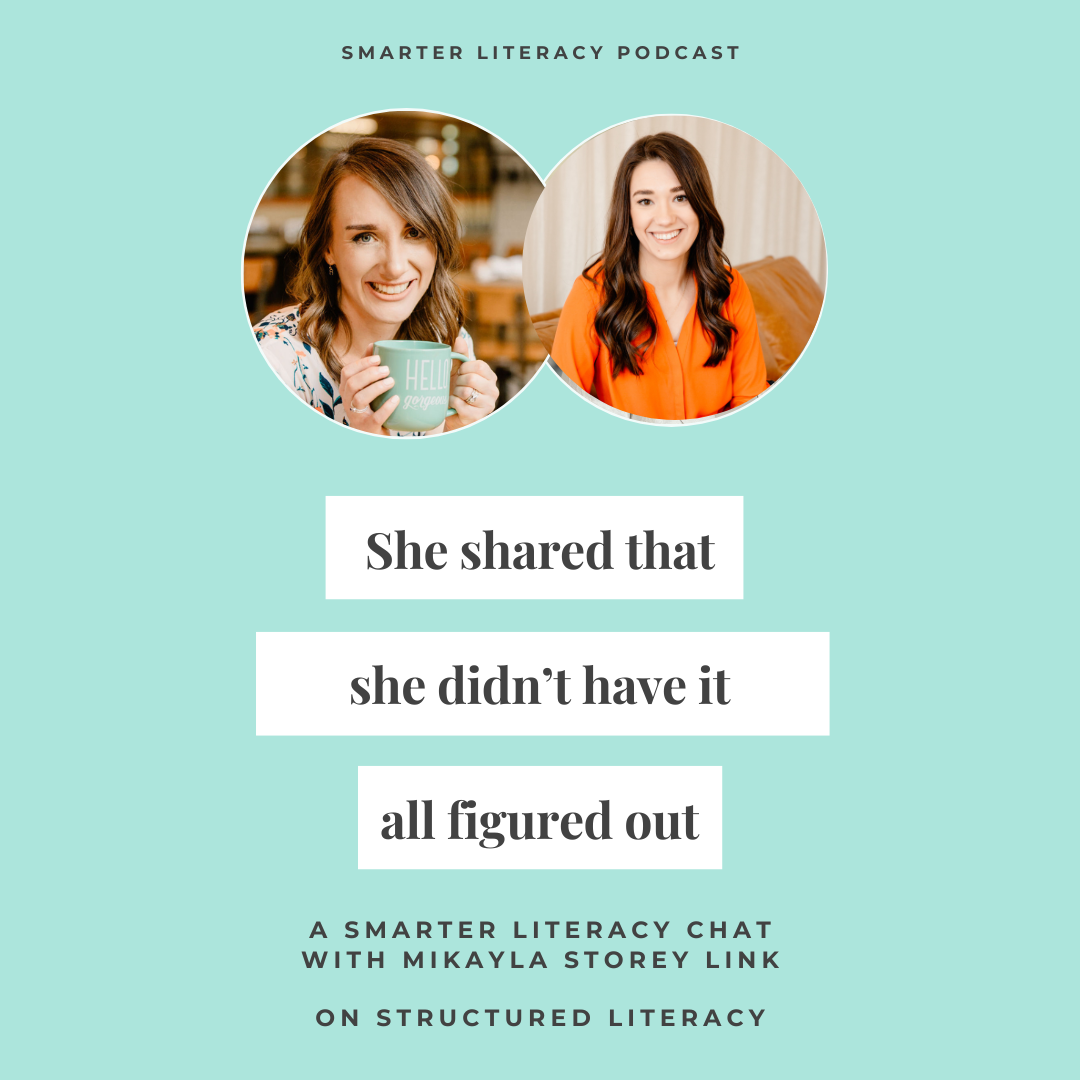
Insider Spotlight: She Didn’t Have it All Figured Out…
We put a lot of pressure on ourselves to have everything figured out before we begin. We want to know exactly what to teach, exactly how to teach it, and exactly how to make it work for every student sitting in front of us. Mikayla's story is such a good reminder that none of us actually start there.
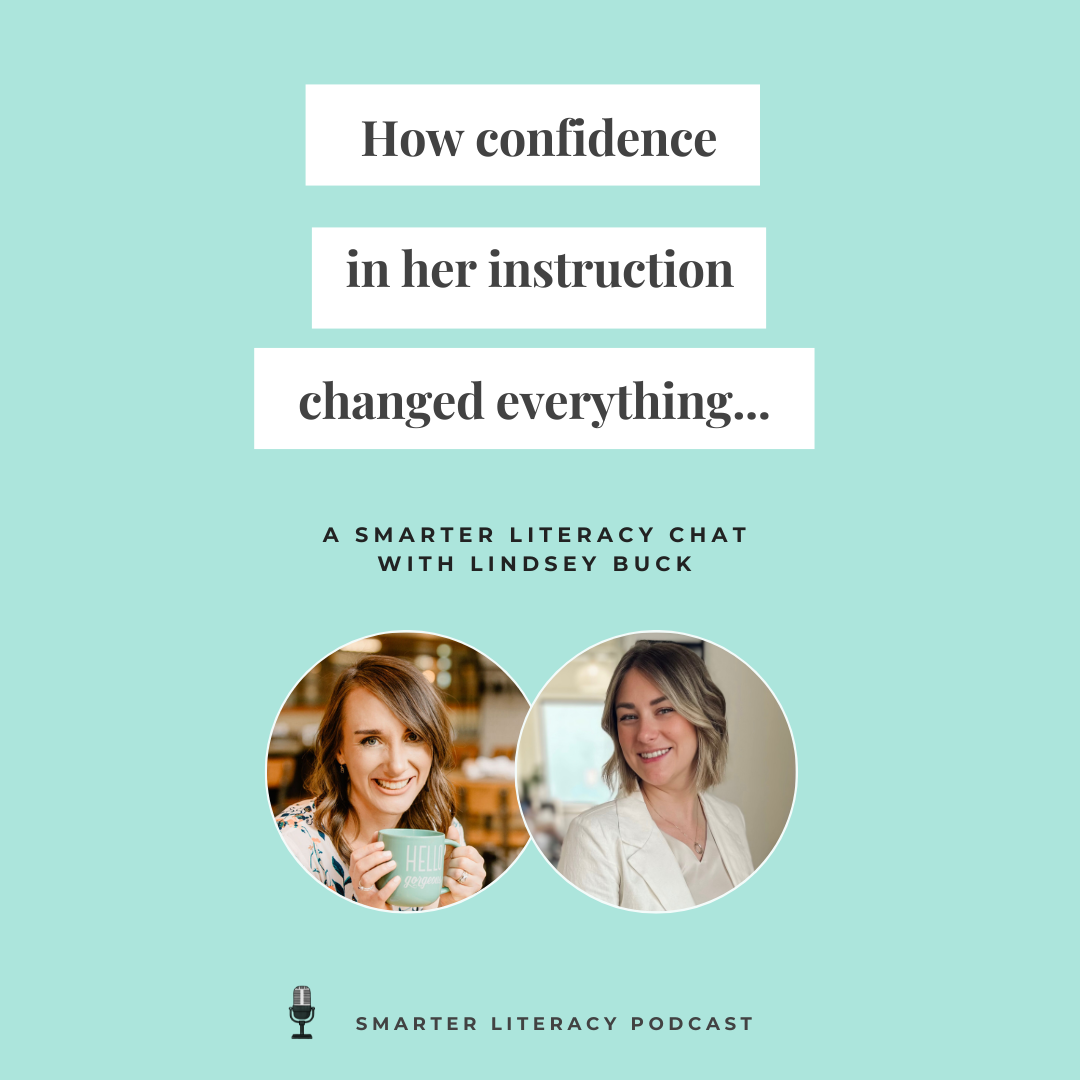
Insider Spotlight: How Confidence in Her Instruction Changed Everything
Instead of Lindsey interviewing a guest, she was the guest, and I got to ask her to walk us back through where she has been. What I did not expect was how much of her story would land on one idea I have been thinking about for a while now: confidence in your instructional decisions is not a personality trait. It gets built. And once it does, it changes far more than your lesson plans.

Insider Spotlight: How She Led a District Through One of The Biggest Instructional Shifts Education Has Seen in Years
If you have been teaching long enough, you have lived through the moment when someone tells you that what you have been doing is no longer the right thing to do.
That moment is the beginning of Sarah Hornung's story, and it is one of the reasons I wanted to share this conversation. Sarah is the Assistant Superintendent for Curriculum Innovation and Pupil Services in Orchard Park Central School District outside of Buffalo, and she sat down with Lindsey on the podcast to talk about what it actually looked like to lead a district through one of the biggest instructional shifts education has seen in years.

Insider Spotlight: How She Stopped Piecing Her Literacy Intervention Together
Raise your hand if you've ever experienced something that looks like this:
Hours spent searching for the right worksheet, the right passage, the right way to explain a skill a student is missing. Late nights piecing together a lesson plan from five different sources, because none of them, on their own, gave you what your student actually needed.
That was Heather's reality when she started teaching third grade, in a school with no reading curriculum at all.

Insider Spotlight: She Stopped Looking for One Perfect Program. Here’s What She Does Instead.
It can be really tempting to look for the one literacy program that works for every student, in every setting, every time.
Honestly, I understand the appeal.
When students are struggling, especially when they are not reading or writing at grade level, we want to know exactly what to do. We want to know what to use, where to start, and whether we are making the right decision. A program can feel like a map, and when you are standing in front of students with very real needs, a map feels reassuring.
But one of the things that stood out to me during our SMARTER Literacy Chat with Rosemary was that she made it so clear that effective instruction is not just about finding the right program.

Insider Spotlight: She Started in a Janitor's Closet. Here's Where She Is Now.
Vicki Brackett, the speech language pathologist we talked to in our latest podcast episode, worked out of a custodian's closet in her first school. Literally. When he wasn't using it, it was hers.
She laughed when she told Lindsey about it. But it's really sad when you think about it. The thing is, she didn't let it stop her. She just kept showing up again and again, in a way that felt authentic to her. In a way that truly lit her up, and when you can do that you either see past or move past your version of working in the janitor's closet.
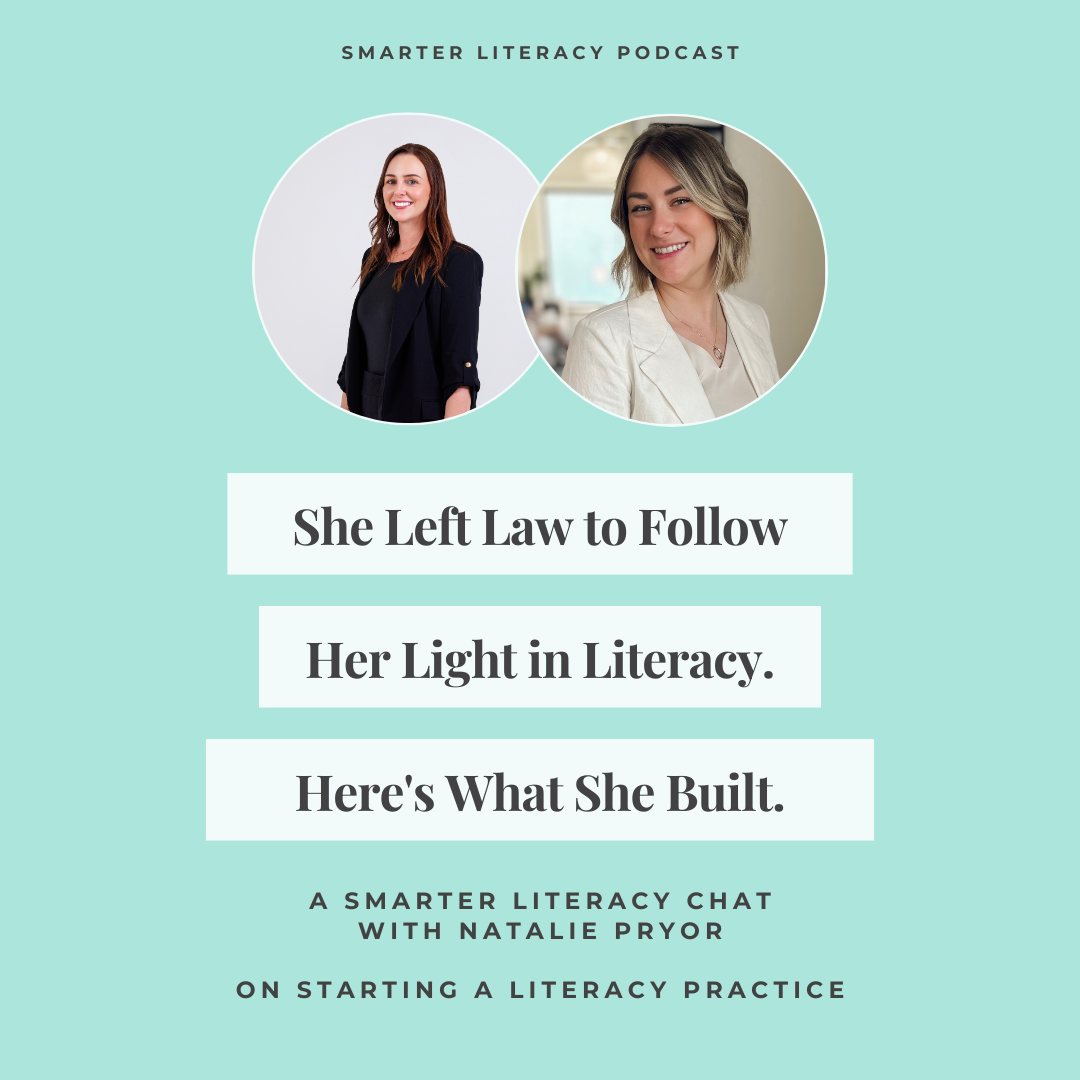
Insider Spotlight: She Left Law to Follow Her Light. Here's What She Built.
Natalie Pryor of Hidden Key Literacy Specialists on the Sunshine Coast in Queensland, Australia started her career as a lawyer. She was good at it. She did it for a long time. And then she had kids, and something shifted. She came to this knowing that there was something else she was meant to do. So she went back to school, got her master's in education, specialized in literacy, and started working one-on-one with kids. And she never looked back.
How to Build Comprehension Skills for Secondary Students
If you have middle or high school students who are struggling with comprehension, you are absolutely not alone. Comprehension is such a complex skill, and many students don’t have a clear strategy to help them dig deeper into text. The good news is that comprehension is a skill that can be developed.
The important thing to keep in mind is that we are looking to build routines so that students know when to use each of the different strategies. It’s great to teach how to find the main idea and key details, and to teach how to make inferences and predictions, but it’s even more important that they know how everything fits together so they can actually use these strategies independently.

How to Teach Students the Power of Editing in Writing
Struggling to help students move beyond a quick “looks good” when editing their writing? Discover a simple, step-by-step editing process that teaches students how to spot subjects, predicates, and conjunctions, fix run-ons, and take ownership of their spelling. Perfect for building stronger sentences and confident writers.
How to Teach the Letter Y
The letter Y can be one of the trickiest parts of phonics instruction because it plays double duty as both a consonant and a vowel. Sometimes Y says /y/ as in yo-yo, and other times it makes vowel sounds like /ī/ in cry, /ē/ in baby, or /ĭ/ in gym. Without clear, explicit instruction, students may feel frustrated and start guessing.
How to Help Students Generalize Their Literacy Skills
Helping students master literacy skills is only part of the equation—the real goal is getting those skills to stick and show up across subjects, settings, and tasks. In this post, we explore how to help students generalize their reading and writing skills beyond isolated lessons. You'll learn how to bridge the gap between instruction and application using strategies that promote transfer, increase engagement, and build confidence. Whether you're working in Tier 1, Tier 2, or Tier 3, these tools will help students take what they’ve learned and apply it meaningfully in other areas of their academic and everyday lives.

5-Steps to Create Effective Literacy Lesson Plans For Your Classroom
An effective lesson planning process has the potential to transform your year.
For us educators, lesson planning can reduce stress because we have everything outlined. It also saves us a ton of time in the long run.
But did you know that lesson planning also benefits our students? When we have clear plans, students begin understanding routines, and the increased cohesion between our lesson components helps them get better results!
Keep reading to learn the 5 step process to creating effective literacy lesson plans AND to grab our FREE lesson planning guides!

How to Lesson Plan for Your Literacy Intervention
An effective lesson planning process has the potential to transform your year.
For us educators, lesson planning can reduce stress because we have everything outlined. It also saves us a ton of time in the long run.
But did you know that lesson planning also benefits our students? When we have clear plans, students begin understanding routines, and the increased cohesion between our lesson components helps them get better results!
Keep reading to learn the 5 step process to creating effective literacy lesson plans AND to grab our FREE lesson planning guides!

5 Back-to-School Literacy Intervention Must-Haves
Prepare for back-to-school with our top 5 MUST-HAVE literacy intervention materials! From whiteboards & dry erase markers to phonogram cards and more, equip yourself with essentials for effective teaching. Discover these must-haves now!

How to Support Your Students with Writing
Do you have students who struggle with writing?
Maybe they struggle to come up with ideas and just stare at their paper. Maybe they have a difficult time organizing their thoughts or using a clear introduction and conclusion. Or perhaps they forget to edit their work for things like capitalization and spelling.
Wherever in the writing process they struggle, one thing is for sure - writing can be tricky!
That’s why we’ve implemented this 3 step writing process. Keep reading to learn more.

How to Support Spelling - Scoop Spelling Strategy
We are so excited to share this resource with you today! Scoop Spelling changed my life! This strategy brought such relief to my students who struggled to spell multi-syllable words correctly and instantly boosted their confidence! This strategy is so simple to use!
First, make sure that your students are solid on syllabication; what syllables are and how to count them. This knowledge is the key to Scoop Spelling. If a student knows or can hear how a word breaks apart into syllables, then they can Scoop Spell!

The Art of Assessment - Guidelines for Scoring Open-Ended Responses
Assessment that drives instruction should be based on evidence-based practices.. To read and write effectively, we need to make connections between phonological processing, orthographic processing, and semantic processing. Our assessments should be designed to measure a student’s ability in each of these areas. However, measuring some of these areas is easier than others.

How to Measure Reading Fluency
Measuring reading fluency is an important step in understanding whether students are on track with their overall rate (speed) and accuracy in their reading. In this blog, we will share the exact process you can use to determine where your students’ reading fluency skills are at using norm-referenced measures and rubrics.