Insider Spotlight: How Confidence in Her Instruction Changed Everything
For one of our last SMARTER Literacy Chats of the season, we flipped the script.
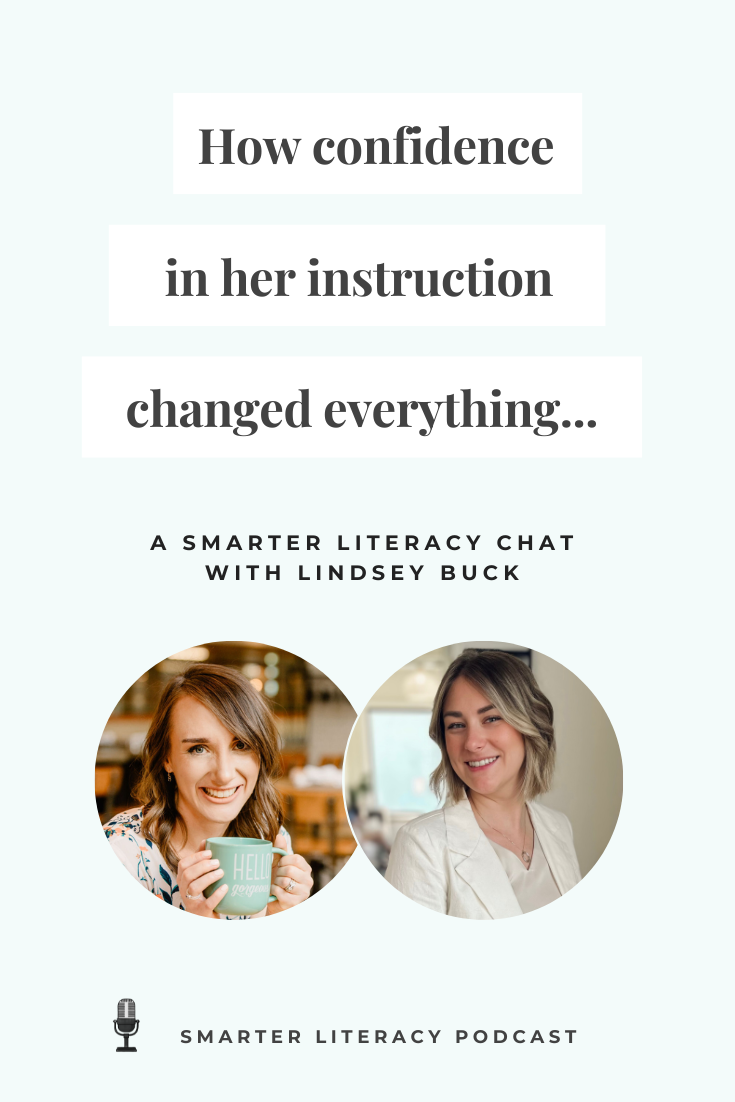
Instead of Lindsey interviewing a guest, she was the guest, and I got to ask her to walk us back through where she has been. What I did not expect was how much of her story would land on one idea I have been thinking about for a while now: confidence in your instructional decisions is not a personality trait. It gets built. And once it does, it changes far more than your lesson plans.
Here is where Lindsey started.
The messy years
Lindsey came into her reading specialist role the way a lot of us come into literacy work, right in the middle of everything. She had been a seventh-grade English teacher who always knew literacy was the real pull, and the year she finally stepped into a reading specialist position happened to be 2019 to 2020. (Yes, that year.)
At the secondary level, there often is not a curriculum waiting for you. So Lindsey did what so many reading specialists do. She stitched instruction together from multiple sources, pulling passages here, finding materials there, working to keep everything accessible for her students while still targeting the right skills. Then the pandemic arrived and she had to relearn how to teach reading through a screen, more or less overnight.
She described those first few years, honestly, as kind of nuts. And I think that feeling is more common in our field than we tend to admit.
She had all the pieces, but none of them were connecting
Even before COVID, something was nagging at her instruction. Her school had leaned into a word recognition approach for intervention, and it did that one job well. But there was no comprehension piece. No vocabulary piece. And even where it taught patterns, there was not much practice built in. Teach a pattern, move on.
She knew what she was trying to put together, but it just felt disjointed. And that feeling happens to so many of us. It makes you question yourself. You start wondering what you are doing wrong, when the honest answer is usually nothing. You’re doing all the right things; it just feels really hard and often leaves you searching for that one “missing piece.”
But then, she shared about one small decision that made a monumental difference for her…
During our conversation, she shared that a new literacy specialist joined the district and asked, more or less, have you heard of this thing called SMARTER Intervention? (Um, how amazing is that?!) She had found us during the pandemic, sitting at home trying to figure out how to help her kids, watching videos, reading blogs, and jumping on coaching calls.
So Lindsey and her fellow tier three specialists sat down for a professional development day and looked through everything together. Her words for that moment were, this is it. This is what I have been looking for. It was cohesive. It held together the word recognition, the comprehension, the vocabulary, and the practice she had been trying to piece together on her own.
What confidence actually unlocked
She dove in mid-year, trial and error, telling her students plainly, bear with me; I am figuring this out alongside you. She did the full training that summer and came back even stronger. That next year was the one where she watched her students make real progress, enough that she was moving kids up and out of tier three.
Once Lindsey felt confident in her instructional decisions, everything downstream got easier. She could sit with content area teachers and explain exactly which accommodations a student needed and why. She could talk to families with clarity. She even described being pulled away for a fire drill, vest on, walkie talkie in hand, then setting it all down and dropping right back into instruction without missing a beat. That is what confidence looks like in practice. It is not spending your energy trying to assemble something that fits together every single day. It is knowing, so you are free to be present for everything else your job asks of you.
And confidence did something bigger than that, too. I watched Lindsey carry it out of the classroom entirely. The same steadiness that let her trust her instruction is what let her raise her hand in new rooms, step outside the familiar, work with us here at Ascend, and eventually build her own literacy practice. When you feel confident in the core of your work, you become willing to evolve. The evolution is not the brave part. The confidence underneath it is.
The important thing to understand
When we step back and look at the whole picture, Lindsey's story is not really about a program, or a job change, or even a season of hard years. It is about what becomes possible once you stop second-guessing yourself, wondering if you’re missing something. That is where confidence comes from. Not from trying harder.
If you are in the stitching-it-together season right now, or the second-guessing season, I want you to know you’re already probably doing all the right things, you may just not be feeling the connection between everything.
If you want to see what that connected secondary structure actually looks like in practice, take a look at our free Structured Literacy training where we walk through exactly what that looks like in our practice.
And if you want to catch the full podcast, click here or download wherever you get your podcasts!