This week we are talking all about:
How to effectively measure a student's phonological awareness ability and track growth over time
It is important that we monitor students’ phonological awareness because it is one of the 5 Core Components of Literacy and is one of the foundational skills that MUST be in place before a student can read and spell with ease.
One of the biggest things we need to remember is that explicit instruction of phonological awareness does not end when a student finishes first grade; it’s a skill that needs to be continued to be developed until it’s mastered.
The only way to know if a student has mastered a skill is to assess their ability over time. To learn more about how we measure phonological awareness, check out the video!
Next Steps
Assessing phonological awareness is an important first step, but the real value comes from using that information to guide instruction. When you know which skills a student has mastered and where they still need support, you can make more intentional decisions about what to teach next and how to tell whether that instruction is helping.
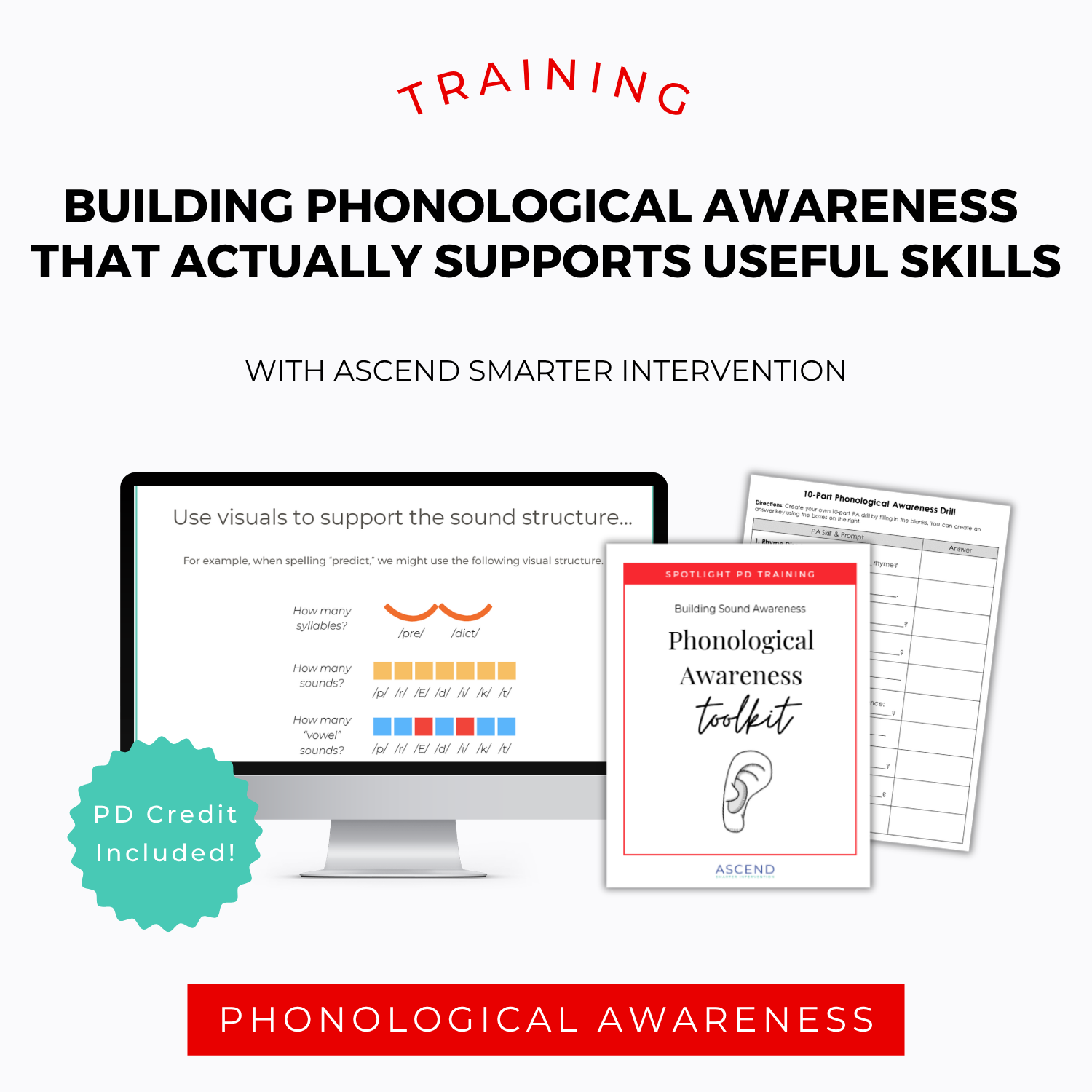
If you’re looking for a practical way to put those decisions into action, our on-demand training, Building Phonological Awareness that Actually Supports Useful Skills, walks you through the key phonological awareness skill sets, how to choose instructional targets based on student needs, and how to build a simple, flexible routine into the reading instruction you’re already doing. You’ll see the routine modeled with a real student and learn how to connect sound work directly to reading and spelling.
You’ll also receive the Phonological Awareness Toolkit, including an editable 10-Part PA Drill, task cards, games and activities for differentiating instruction, progress-monitoring records, grade-level benchmarks, and “Creating the PA Bridge” guides that connect phonological awareness to reading and spelling. The training includes a one-hour PD certificate and lifetime access to the training and materials, so you can revisit them as you plan instruction and respond to your students’ progress.