
Science-based literacy resources and articles
for families, educators and schools
Search by Category:
Categories
- Advocacy
- Authentic Literature
- Business
- Classroom Strategies
- Comprehension
- Data Tracking
- Differentiation
- Dyslexia
- Evaluation and Assessment
- Executive Functioning
- Games & Activities
- Helping My Child At Home
- How To
- IEP/504 Plan
- Lesson Planning
- Math
- Online Intervention
- Organization
- Parents
- Phonics
- Phonological Awareness
- Reading Comprehension
- Reading Fluency
- Research
- SLP
- Spelling
- Vocabulary
- Writing

How to Get the Most Out of Your Literacy Lessons
Have you ever thought to yourself - “How in the world am I EVER going to fit everything into my lessons?!” or maybe, “How can I better support my students?”
We certainly have!
The great news - we can actually make our interventions lessons MORE effective WITHOUT adding a ton of additional time. Keep reading to learn how!

How To Explicitly Teach Phonics Rules
It’s no secret that research tells us we need to teach rules explicitly - but what exactly does that mean?
Today, we are going to break down exactly what “teaching rules explicitly” means as well as walk you through how you can use this approach in your lessons!
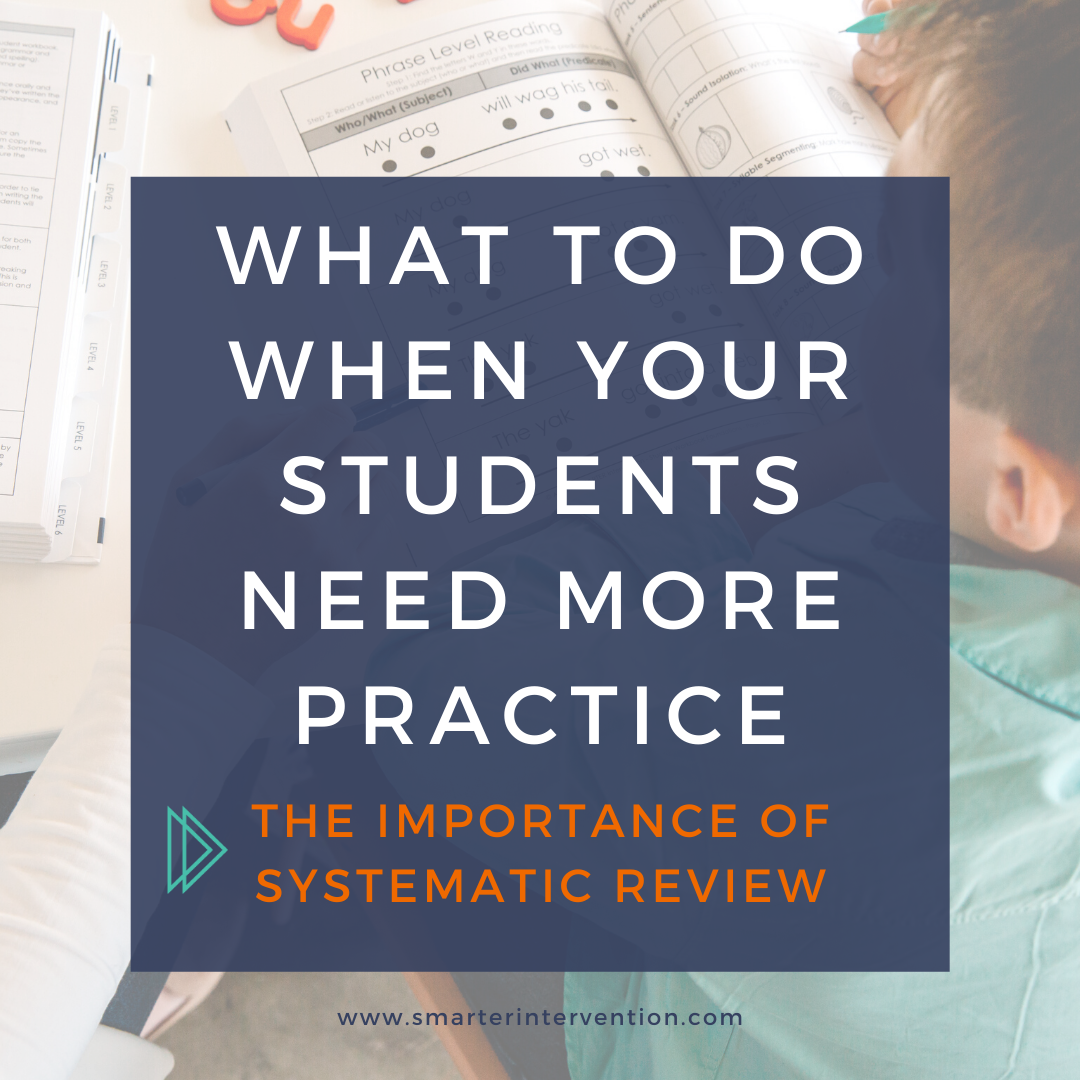
What To Do When Your Students Need More Practice: The Importance of Systematic Review
Have you ever looked through your students’ lesson data and thought - “gosh, they just aren’t getting this?”
We’ve all been there. Today - we are going to break down what you can do when students need more practice and the importance of systematically reviewing previously learned concepts.

How To Fit Phonological Awareness into Your Reading & Writing Lessons
It is no secret that phonological awareness skills are a key component to reading and spelling, but for a long time it felt like the way to effectively fit these drills into our lessons WAS a secret! After a while of looking at the data (and some trial/error!), we found a way that worked for us and want to share it with you!

The Future of the Science of Reading
The term “Science of Reading” has gained a lot of popularity in recent years. Today, we wanted to break down what the Science of Reading is and what its future holds.
First things first -
What is the Science of Reading?
The Science of Reading encompasses a comprehensive collection of research completed over many years by experts in the fields of education, psychology, neuroscience, language development, and more regarding how we learn to read.

How to Teach Paragraph Writing using a Research-Based Approach
Paragraph writing can feel like a BIG skill - both to teach & to learn! That’s why today, we are breaking down how we can use a research-based framework to make paragraph writing & paragraph writing instruction easier! There’s even a free resource further down for you to use in your paragraph writing instruction!

How to Teach Sentence Level Writing using a Research-Based Approach
Discover the key steps to teaching sentence-level writing effectively! Explore the research-based approach, systematic instruction, multisensory techniques, and targeted differentiation for enhanced learning outcomes. Elevate your students' writing skills effortlessly!

How to Teach Spelling using a Research-Based Approach
Discover the essential steps for effective spelling instruction in reading intervention programs. Learn about systematic, multisensory, and research-based approaches to teaching spelling. Explore targeted instruction and explicit techniques for improving phonological awareness and vocabulary skills.

How to Teach Sight Words using a Research-Based Approach
In reading intervention we hear terms like sight words, red words, high-frequency words, phonetically irregular words, heart words, and so many other variations used every day. Today, we are jumping in to explain what these words actually are, and what the research says about how we should be teaching them!

How to Teach Reading Comprehension using a Research-Based Approach
Now if you’re like us and you’re obsessed with the science of reading, you may already know that there is a very systematic and structure in which you can teach phonics to help give struggling and beginning readers the tools they need to be successful (and hey - no shame if not, you can check out our phonics blog too). But, did you know there is also really clear set of reading comprehension skills that students need to be successful comprehenders?!

How to Teach Reading Fluency using a Research-Based Approach
When we think about reading intervention, reading fluency is definitely one of the first things that come to mind. Today, we are breaking down exactly what reading fluency is and the ACTUAL skills we should be targeting.
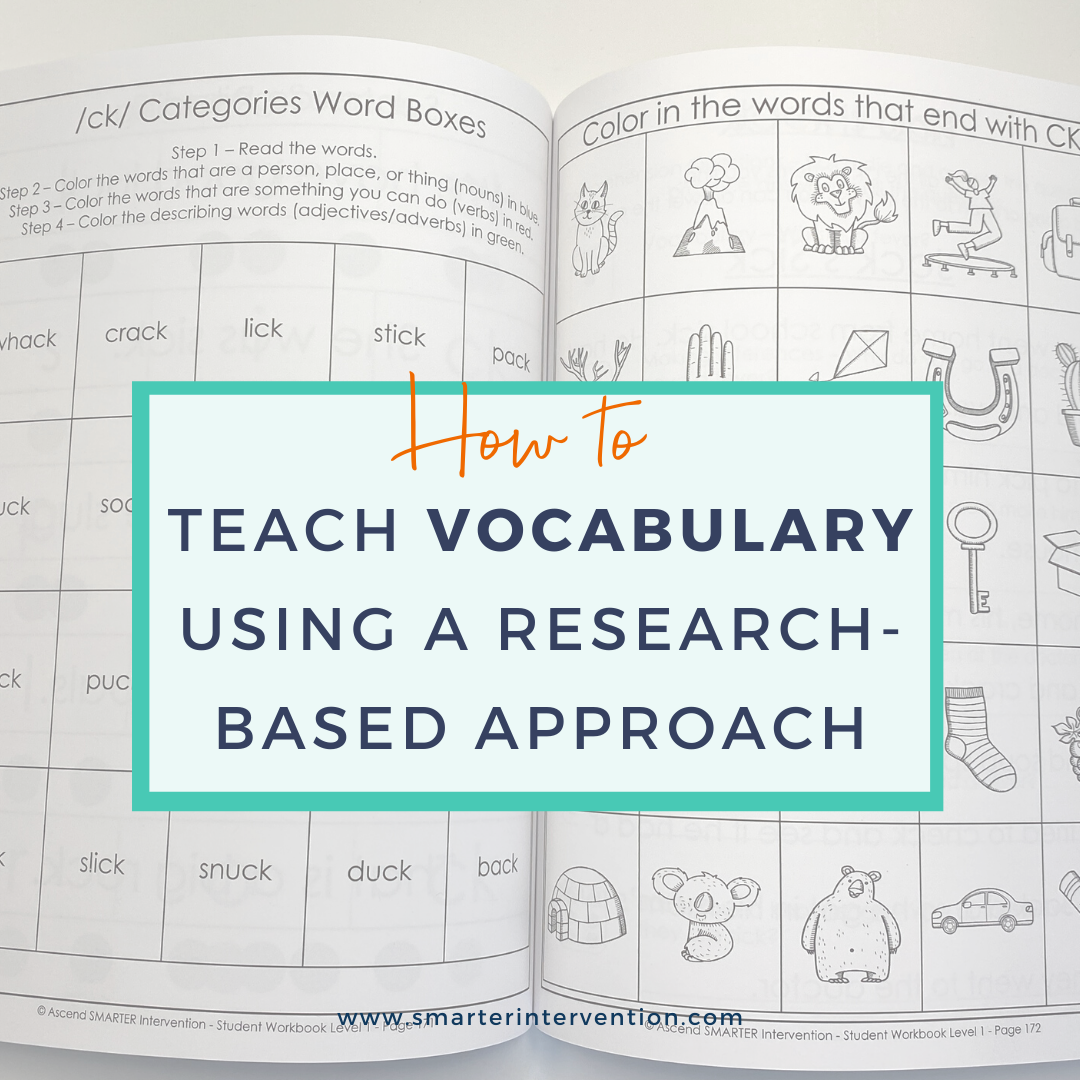
How to Teach Vocabulary using a Research-Based Approach
When I started out in reading intervention - the thought of teaching vocabulary terrified me. Maybe it was because I wasn’t sure how much my students were actually struggling with it, I wasn’t sure how to assess it, I wasn’t sure how much of it fell on me to teach, maybe it was because I thought it was just morphology, or - maybe it was because I still remember how much I hated memorizing hundreds of definitions & word origins from when I was in school.
Whatever it was - I dreaded vocabulary because it felt overwhelming and the way I was taught when I was a student (find the part of speech, word origin, and definition) never seemed to be helpful - just tedious.
That is until I learned what vocabulary instruction should actually look like and why it is so important. Today - we are going to break that down.
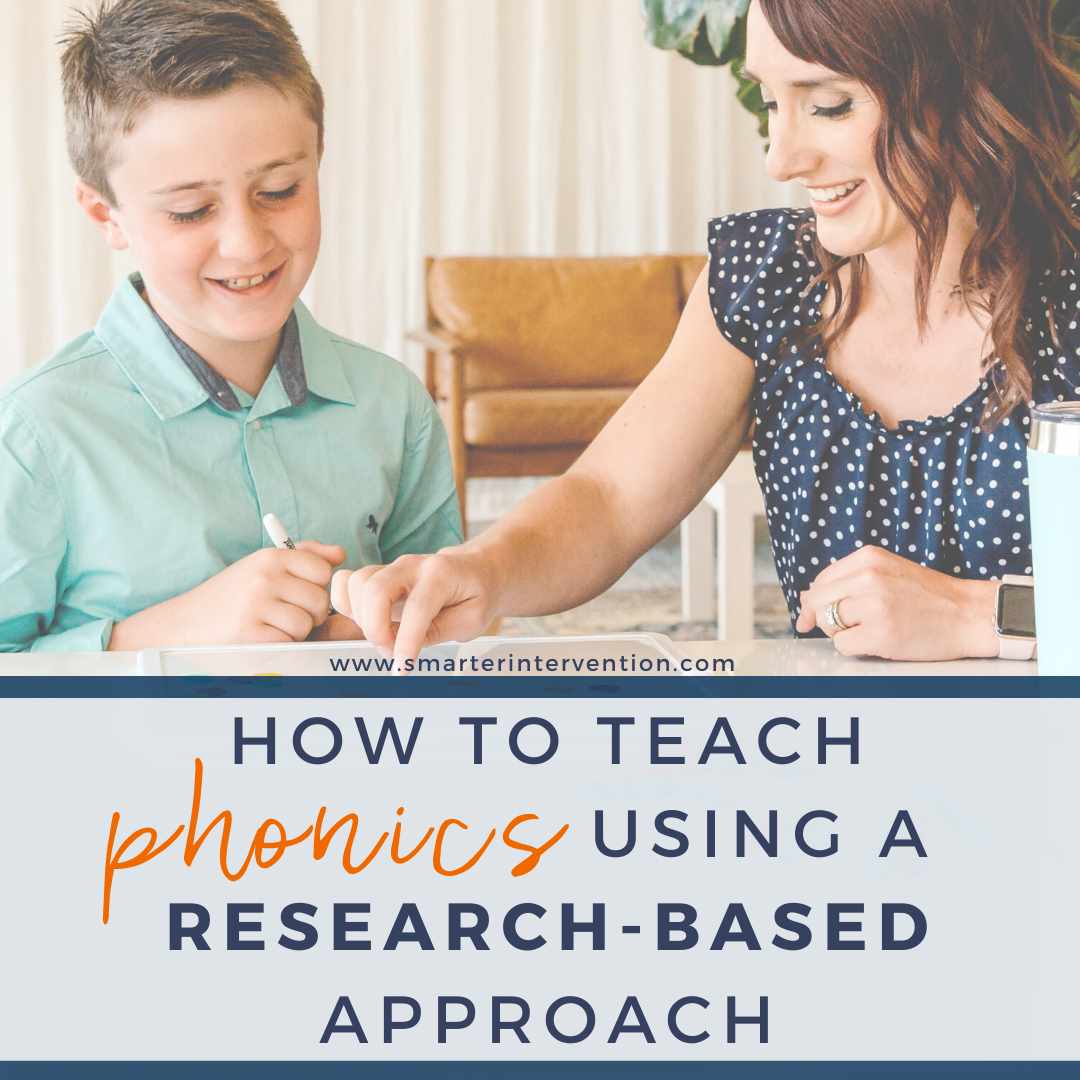
How to Teach Phonics using a Research-Based Approach
In the field of reading - phonics is a pretty common term. However, there is much more to phonics & teaching the skills it encompasses than you might think.
Today, we are going to break down what exactly phonics is, and how we ACTUALLY should be teaching these skills to our students. Here’s the thing - there’s a LOT of information out there and it can definitely feel overwhelming if you are trying to pull all of this together alone. The good news though? It doesn’t have to be hard! Our goal is to give you a clear framework you can use to implement research-based instruction!
How to Teach Phonological Awareness using a Research-Based Approach
First things first, what is phonological awareness?
We’re so glad you asked, at the simplest level - it’s understanding the sounds of our language. It includes skills that we need to break words up into individual sounds and blend sounds together in order to “sound words out.” Phonological awareness DOES NOT require any knowledge of letters. Students could complete phonological awareness drills completely in the dark (meaning they don’t need to be reading or recognizing letters at all). The number of sounds in words and letters in words are not always the same!

The 3 Biggest Factors to Your Literacy Intervention Success
There are three main pieces to your (and your students!) success. We refer to these key pieces as the “3 Ms” - Motivation, Method, Mindset. In order to be truly effective, you need all three. Keep reading to learn about what this looks like in literacy intervention.

The Actual Cost of Duct-Taping Your Intervention Together
Struggling with scattered resources for reading intervention? Discover the pitfalls of the one-off approach and learn how to streamline your lesson planning. Find out why cohesion and intentionality matter and explore a program that targets all 5 Core Components of Literacy in EVERY lesson.

Implementing Effective Literacy Intervention Lessons
Learn the keys to effective literacy intervention implementation likened to driving a car: data fuels the journey, lesson design provides navigation, and execution is akin to driving. Adaptability is crucial, akin to navigating roadblocks. Stay true to research-based principles.
What Skills Should We Be Teaching in Structured Literacy?
If you’ve ever found yourself asking, “What exactly should I be teaching?” when planning reading intervention, you’re not alone. The Science of Reading tells us what works, but translating that into daily lessons requires clarity on which skills to target. In this post, we walk through the core reading and writing skills every structured literacy program should address across phonological awareness, phonics, vocabulary, fluency, comprehension, and written expression. Whether you’re refining your scope or starting from scratch, this guide will help you build a more intentional plan for closing the gap.