How to Get the Most Out of Your Literacy Lessons
Have you ever thought to yourself - “How in the world am I EVER going to fit everything into my lessons?!” or maybe, “How can I better support my students?”
We certainly have!
The great news - we can actually make our intervention lessons MORE effective WITHOUT adding a ton of additional time. Keep reading to find out how!
How to get the most out of your literacy lessons
First things first - you need to identify what your students need.
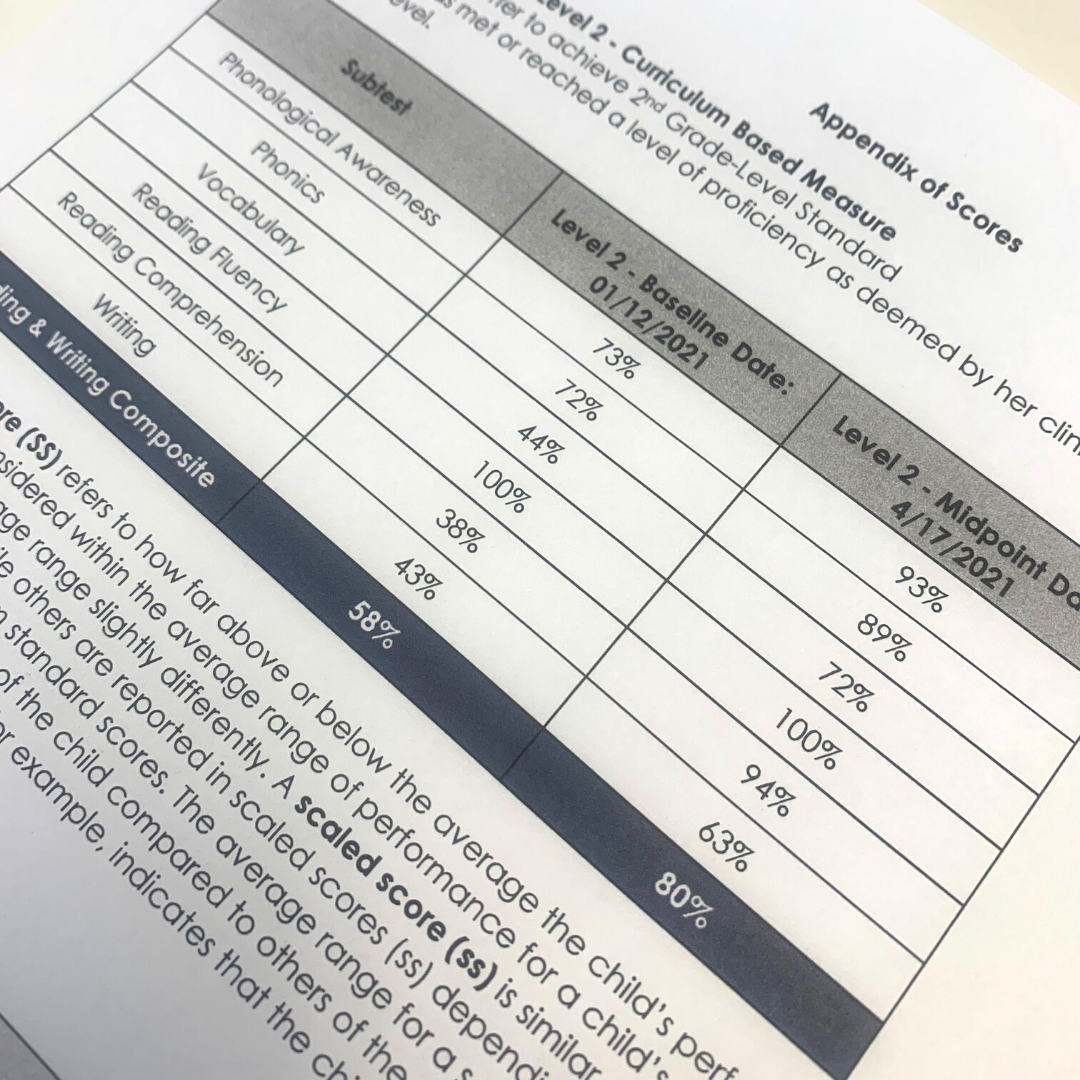
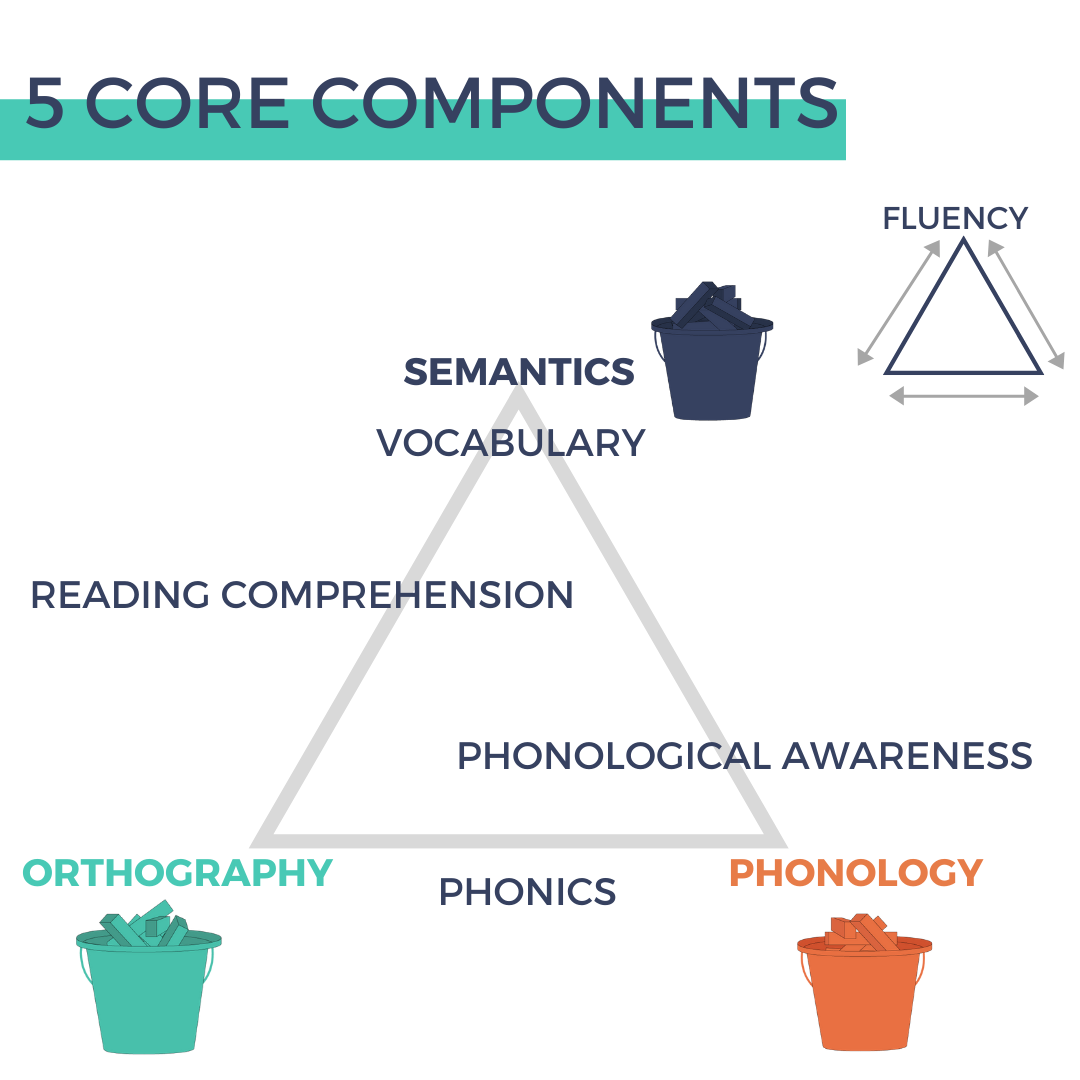
The first thing you need to do is figure out exactly where your students are struggling. If you have been following us for a while, then by now you know we are super data nerds. We ALWAYS recommend starting with an assessment to figure out where your students’ strengths & breakdowns occur throughout the 5-Core Components of Literacy and completing scheduled progress monitoring assessments. This data will allow you to see what “big-picture” needs your students have so that you can target these areas in your intervention.
For example -
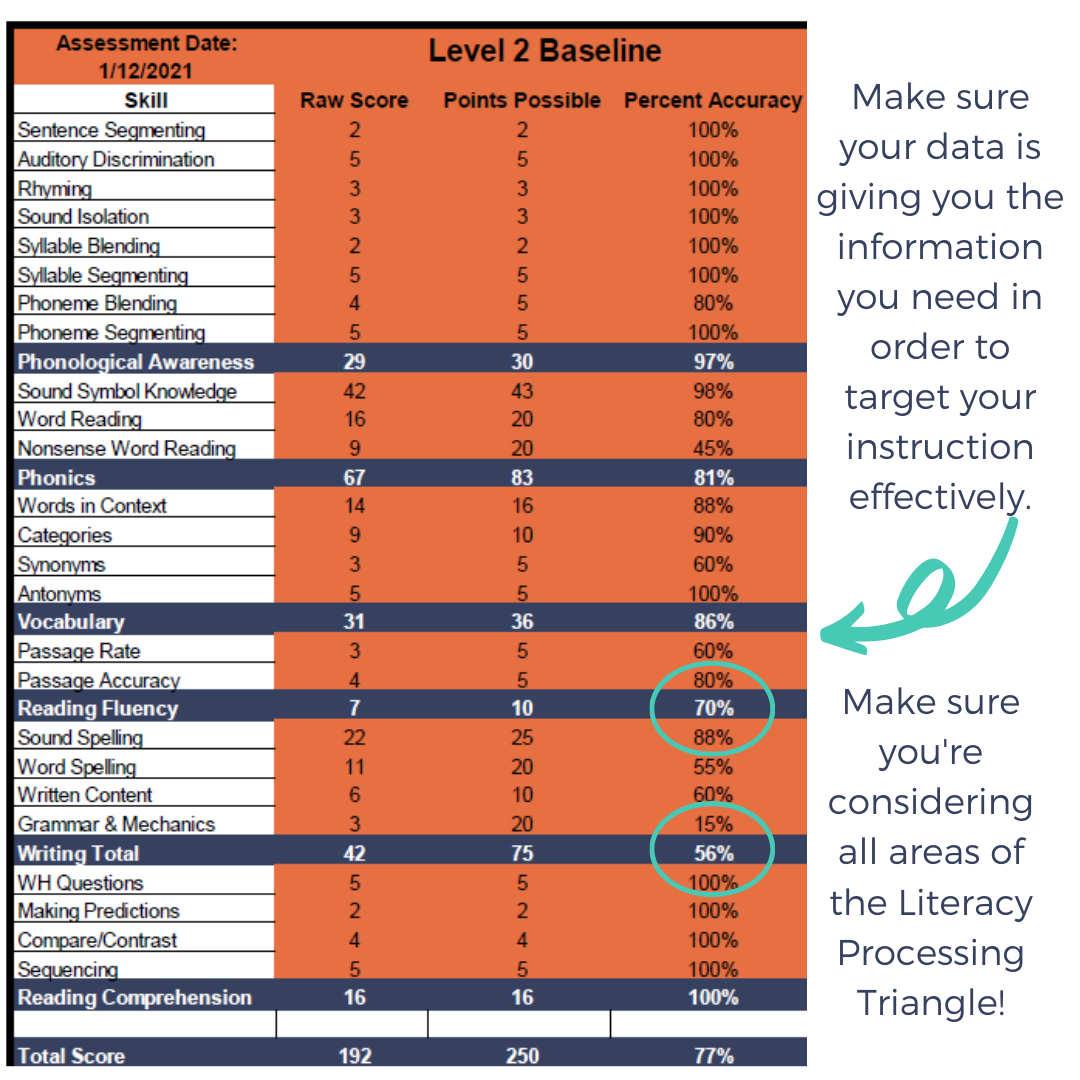

Then, we take data every week on the specific skills to see how students are progressing. Depending on where we see holes/gaps occurring in the specific skill activities, we will target those more heavily.
For more information about our data-tracking process, check out our “data-tracking series” >>here.<<
Once you know where students are struggling - you can make your intervention MORE effective by targeting these skills.
Effective, targeted intervention is easier than you think.
In intervention, we are all about targeted, individualized instruction, but that doesn’t mean we need to reinvent the wheel for every child!
We are all about differentiating within a framework.
This means that we have research-based activities we use with all of our students, but we tweak certain pieces based on each child’s data. Let’s look at this in action.
In this video, you see a reading lesson where students learn about the -dge phonogram. Typically in a reading lesson, students are asked to decode a list of words.
These word lists offer endless possibilities for easily individualizing your lessons.
Depending on where your students struggle, give them tasks to complete (using the words they just read) to target those areas. For example, if a child struggles with vocabulary, ask them to look through the list and find a synonym or antonym for something. You can also have them identify nonsense words, pick a word to use in context, talk about multiple-meaning words, or simply define a few of the words.
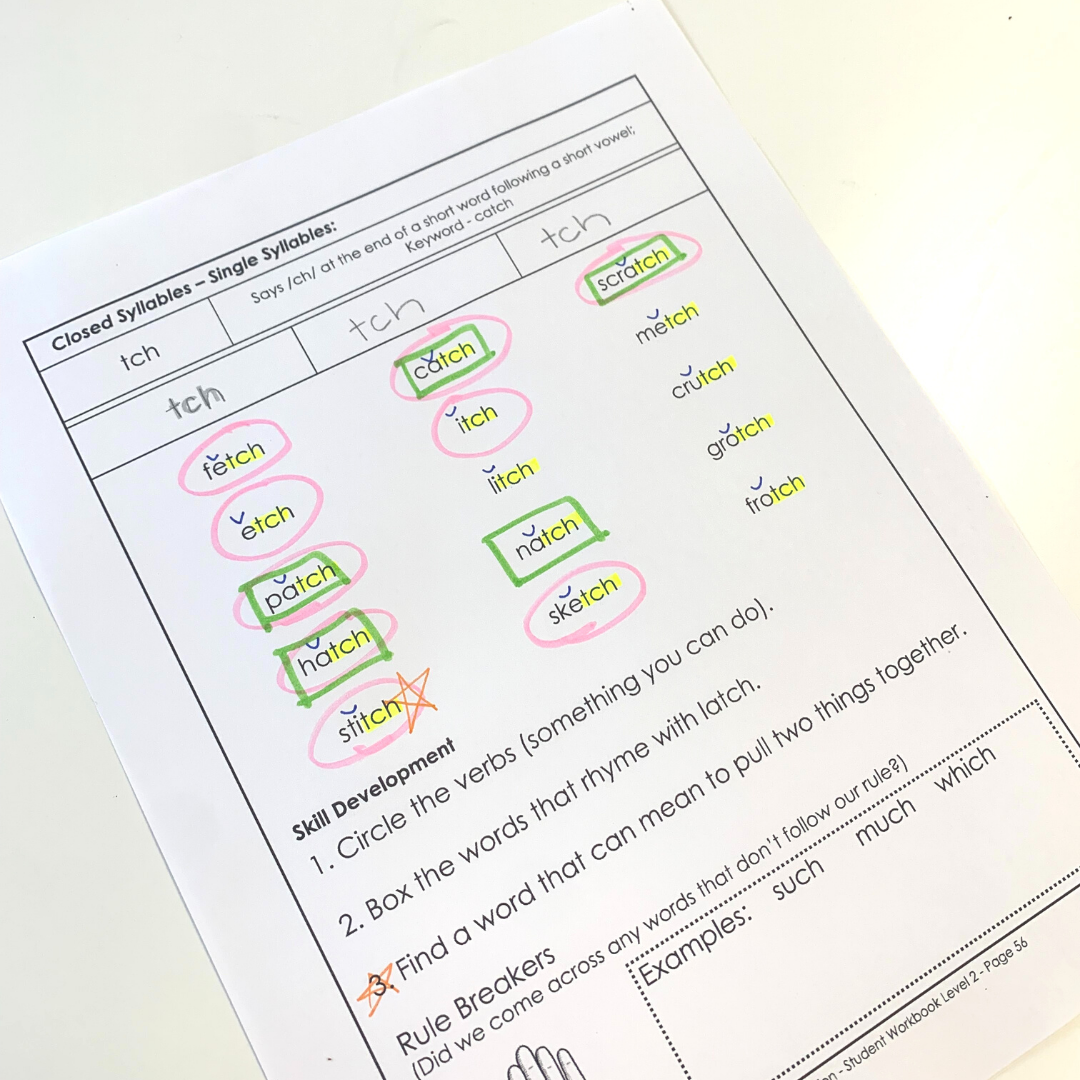
If a child struggles with orthography, have them identify certain letter patterns.
If a child struggles with metacognition, have them identify the words they don’t know.
If a child struggles with fluency, use these words as a fluency task and see how many they can read correctly in one minute.
If a child struggles with phonological awareness, have them find all of the words that rhyme or all of the words with 3 syllables.
…the possibilities are endless.
Using one activity (whether that is a word list, spelling words, sentences, etc.) in multiple ways allows us to target each student’s needs WITHOUT making the lesson last for weeks!
This is especially helpful when you are working in small groups. Each child can have questions specific to their needs, so that each child gets exactly what they need!
If you want to start getting the most out of your instructional time, start with research-aligned routines. We made a FREE Literacy Routines Guide that provides a simple framework for turning research-based literacy into clear, predictable routines. Give it a try and see how these routines help add structure and flow to your instruction.