
You might be wondering if teaching rhyming is necessary or helpful for your students.
Some students seem to be able to do this easily and naturally, whereas others cannot seem to get the hang of it. They just don't hear the rhyme!
Recently, research has been mixed on whether or not it's even useful to teach rhyming if students aren't getting it.
The argument here is that it isn't necessary to teach because it doesn't directly translate to reading in the same way blending does.

Grab this rhyming resource on TPT >>here!<<
While we absolutely can understand the merit of this argument…
…we have found it to be helpful in our lessons because it helps students understand the structure of words and builds fluency.
In order for words to rhyme, they need to have the same rime (yes - it is spelled that way!). This means that the vowel and ending sounds of the words are the same.
For example, dog and log rhyme because both end in -og. Similarly, capture and doctor rhyme because both end in -er.
When building these skills into our lessons, we ask students to recognize whether or not two words rhyme. We call this rhyme discrimination. We will also ask them to produce a rhyme (rhyme production).
For younger students, this often includes CVC or shorter, one-syllable words. For older students, we will often expand to multisyllable words or words with affixes.


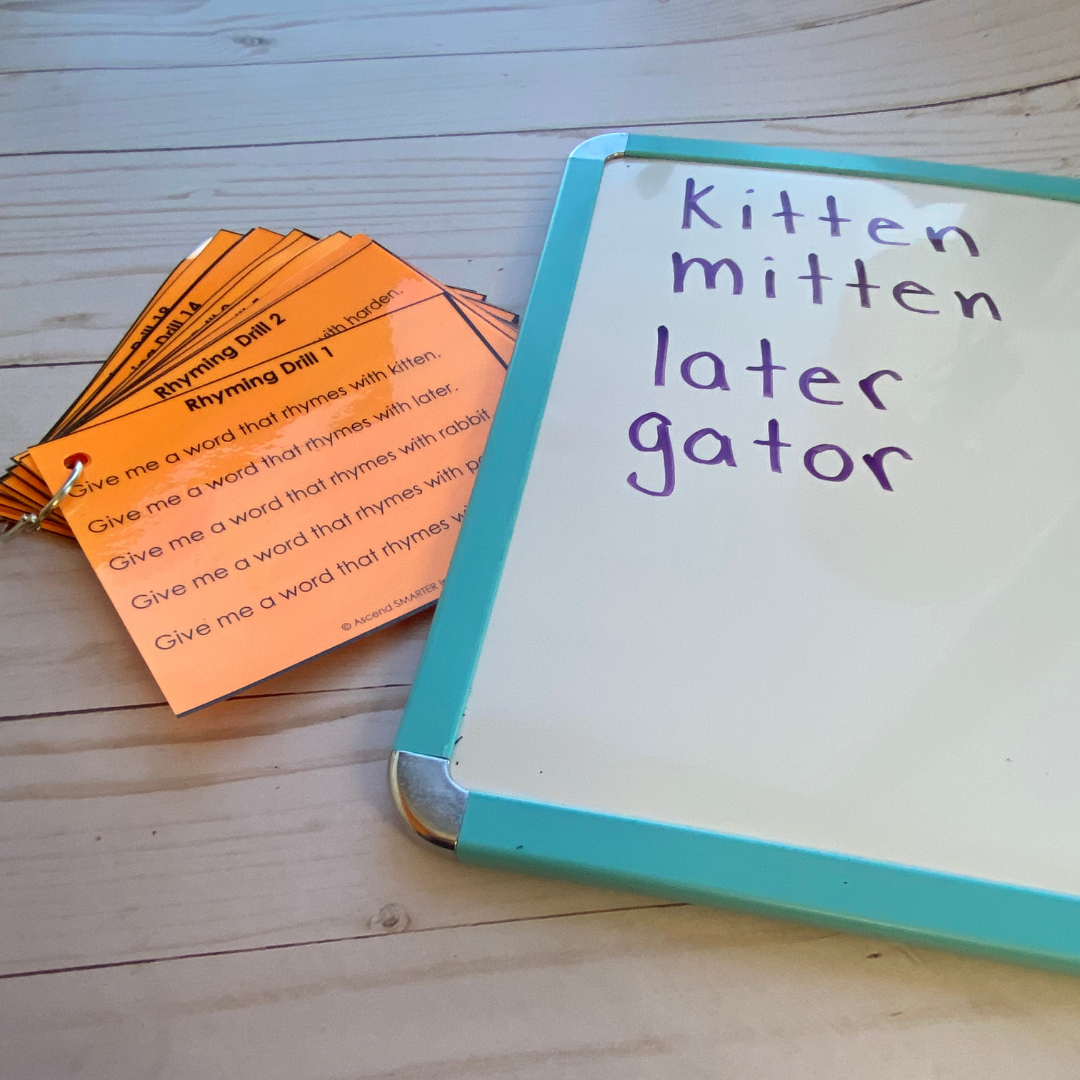

The benefit of working through rhyming activities is that students can more quickly identify word endings, which significantly improves their overall fluency at the word level. Essentially, being able to rhyme helps us focus on bigger word chunks so we don't have to sound the entire word out every time. It's creating efficiency in our reading and spelling.
Now, as we will mention again and again…
This should be a quick activity or center-based activity in your lessons.
This should not be a focus for an entire lesson, as there are definitely additional valuable skills you need to make sure to fit in. If you're interested in learning more about how to fit it all in, you can check out our blog >>here<<.
Final Thoughts
When a student struggles to hear or produce rhymes, it can be a sign that they need more support understanding how sounds work together in words. The trick is knowing how much time to spend on rhyming, when to move on, and how to connect that practice to the reading and spelling skills students are working toward.
If you’d like a clearer plan for bringing phonological awareness into your lessons, our on-demand training, Building Phonological Awareness that Actually Supports Useful Skills, walks you through the key skill areas, how to choose what to target based on student needs, and how to build a simple routine into the instruction you’re already doing. You’ll also get practical materials you can use right away, including an editable 10-Part PA Drill, task cards, games and activities for differentiating instruction, progress-monitoring records, grade-level benchmarks, and guides for connecting phonological awareness to reading and spelling. The training includes a real-student demonstration and a PD certificate, and you can revisit it whenever you need a refresher.
You can also see a rhyming drill in action by watching the video below!