Insider Spotlight: She Left Law to Follow Her Light. Here's What She Built.
A pivot that changed everything
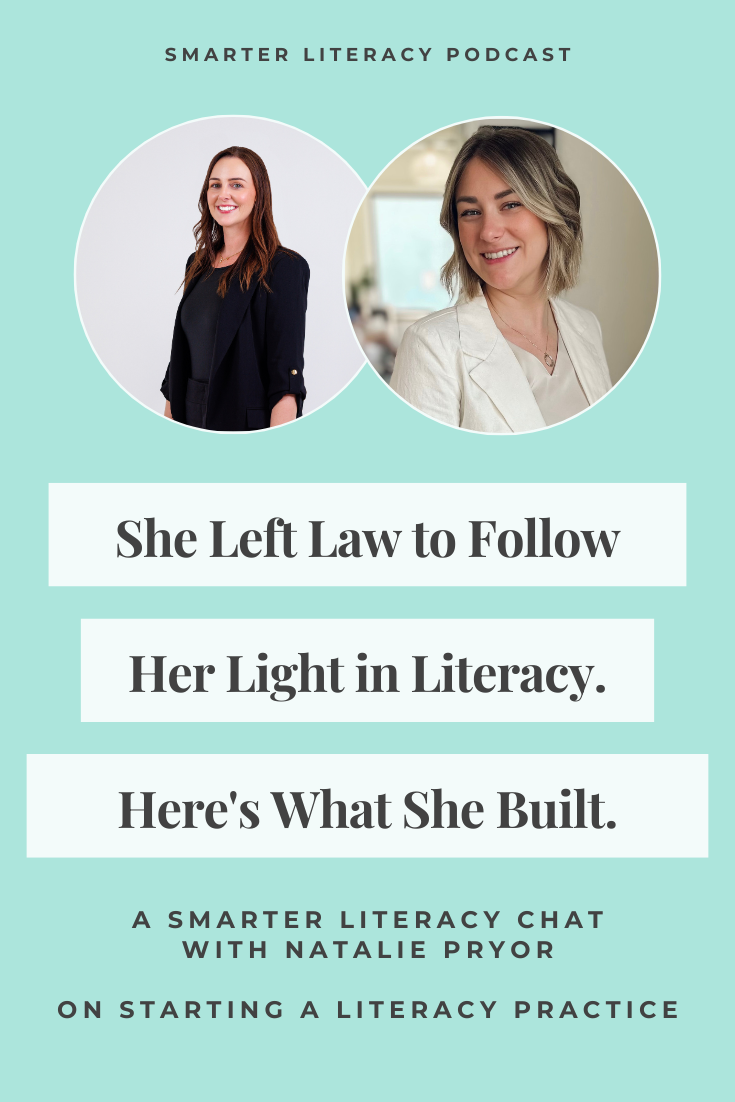
Natalie Pryor of Hidden Key Literacy Specialists
on the Sunshine Coast in Queensland, Australia sat down with Lindsey to share about her journey from law to literacy on the podcast. When I listened to this episode, I found myself stopping it more than once to really hear what Natalie was saying.
Natalie started her career as a lawyer. She was good at it. She did it for a long time. And then she had kids, and something shifted. She came to this knowing that there was something else she was meant to do. So she went back to school, got her master's in education, specialized in literacy, and started working one-on-one with kids. And she never looked back.
What struck me about the way she tells this story is that she doesn't frame it as escaping something. She frames it as moving toward something. There's a difference. And I think that distinction matters a lot for anyone who is also in that space of considering a shift or pivot.
"It has been the best thing that I have ever done. Even the days where you wake up and you're like, ugh, work today, by the time that I'm at work, I'm loving every second of it. I leave and my heart is full." — Natalie Pryor, Hidden Key Literacy Specialists
I know that feeling. I spent years at Children's Hospital in Colorado as an assessment specialist and then as a learning specialist, and I loved it. I genuinely did. I learned so much there. But there also came a point where I felt called to build something that was truly mine, a space that looked and felt like me, that served the way I wanted to serve, that could shift and grow as I did. We opened our literacy clinic in 2015, and over a decade later, that freedom to build something that actually reflects who I am and what I believe is still the biggest joy of my career.
Natalie's story reminded me of that. And I am curious if it brings something up for you, too.
Here were a few of the key takeaways I left this episode with:
1. What happens when your space is a reflection of you…
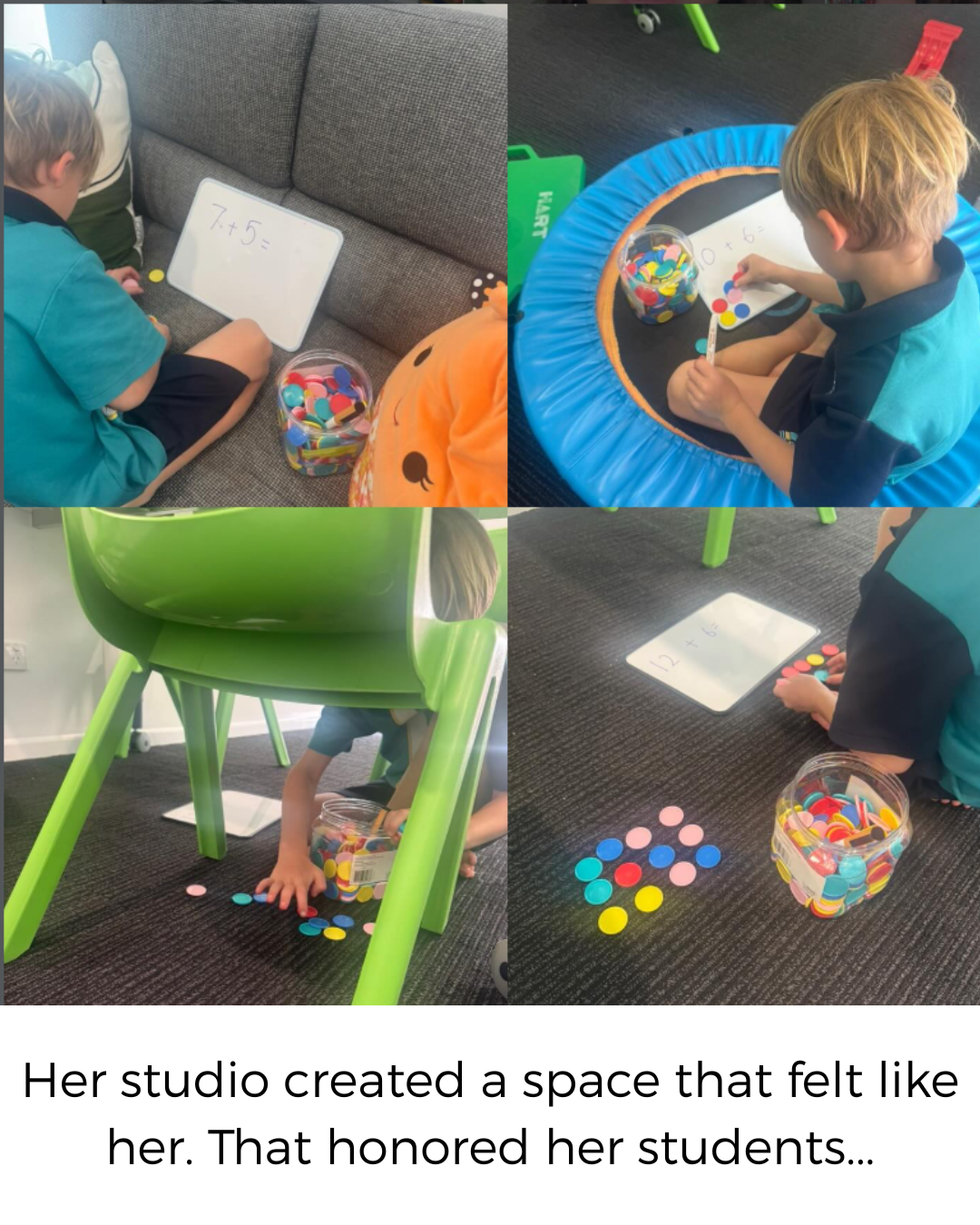
Natalie's studio has mini trampolines. Obstacle courses. Sensory toys. A big whiteboard table. A couch. A spot under the table where kids can sit on the floor with a whiteboard and call it cave reading. When students arrive, they choose whether shoes are on or off. They pick where they want to sit. They always start with a game.
Now, I know what some of you might be thinking. I have 28 kids and a standardized classroom and zero mini trampolines. And that's real. The logistics of Natalie's setup are specific to her context.
But here's what I actually heard underneath all of that: she built a space that communicates something to every student who walks through the door. You have a say here. You are safe here. You don't have to perform or pretend here. We start with connection, and then we learn.
"By having that safe space and having them happy and actually looking forward to coming, they're really open to learning." — Natalie Pryor
That's not a mini trampoline thing. That's a values thing.
And I think most of us, in whatever setting we're in, have more ability to create that feeling than we sometimes give ourselves credit for. What does your space say to the kids who walk into it? What does the first five minutes of your lesson communicate? That's the question Natalie's studio is really asking.
2. The relief of finally having a name for our challenges…
For me, one of the most moving parts of this conversation is when Natalie talks about diagnosis. Not from a clinical distance, but as a mom. Her daughter has dyslexia. Her son was diagnosed with autism. She talks about the moment the pediatrician explained her son's diagnosis to him directly, and he said: "Oh, finally someone understands me."
She said she had chills. I believe her. I've seen that same moment in our clinic more times than I can count.
"It's not that I'm stupid. It's that my brain works differently. I'm going to use these other strategies and it is going to take me longer, but that's okay." Natalie Pryor, sharing her daughter's words after her dyslexia diagnosis
In our practice, we talk about this all the time. We use an analogy with students and families that goes something like this: imagine you're left-handed, but no one ever told you.
For years you've been trying to write with your right hand and wondering why it feels so hard, why you keep falling behind, why everyone else seems to get it and you don't. And then one day someone says, wait, you're left-handed. Here, use this hand instead. Here are the strategies that work for the way your hand actually works.
That's what a diagnosis can do. It doesn't change who the child is. It just finally gives them the right hand.
Natalie makes a really important point in the episode about the stigma around labels right now — this cultural swing toward seeing diagnosis as something to avoid or resist. And she pushes back on that gently but so clearly. In her experience, and in ours, kids don't use a diagnosis as an excuse to stop trying. They use it as an opportunity to understand themselves and move forward.
3. She saw a need, and she built something…
Here's the part of Natalie's story that really gets me. She wasn't just working with kids on literacy. She was noticing things.
→ Noticing that a lot of her students were struggling with short-term working memory.
→ Noticing that connection and confidence were barriers just as real as decoding.
→ Noticing that the tools that existed didn't quite cover what her students needed.
So she did something about it. She supported her students in a different way. She partnered with a clinical psychologist to design products that target self-esteem and connection. She followed her instincts, trusted what she was seeing in her students, and created something that didn't exist yet.
For example, she created a Conversation Tower — a Jenga-style tower with conversation starters built in, designed to help kids and families build the kind of deep, meaningful connection that supports confidence and emotional growth. She also created a 30 Day Confidence Code program, developed alongside a clinical psychologist.
We've been using the Conversation Tower in our clinic and we love it. It does exactly what Natalie describes: it creates that moment of connection that opens the door to everything else. And knowing that she designed it from scratch, out of something she noticed in her own students, makes it mean even more.
This is what it looks like to follow your light all the way. Not just to the point where you have a practice you love, but past that, to the point where you're creating things the world didn't have before.
You can learn more about Natalie at Hidden Key Literacy Specialists and follow her work at @hidden_key_ls on Instagram.
Who needs to hear this…
I've been thinking about who this episode is really for. And I keep coming back to the same person.
An educator who’s good at what they do, who cares so deeply. But there's something underneath the day-to-day that feels a little dim, like they’re not fully expressing what they have to offer, like the setting or the system or the structure doesn't quite have room for all of who they are. That educator is not burned out exactly. They’re just... not fully lit.
If that's you right now, I want you to listen to this episode. Not because Natalie's path is the path, private practice isn't for everyone, and that's completely fine. But because hearing someone describe what it feels like to build something that truly matches who you are and how you want to show up for kids? That's the kind of thing that gives you permission to imagine your own version of that.
"It is scary starting any new venture, but it is so rewarding and so fulfilling." — Natalie Pryor
Your version might be a private practice. It might be the way you set up the corner of your classroom. It might be how you run your intervention block, or the products you choose, or the way you build relationships with the kids who are hardest to reach. But there is a version of this that is yours. And Natalie's story is a really beautiful reminder that it's worth going looking for it.
If this is stirring something in you…
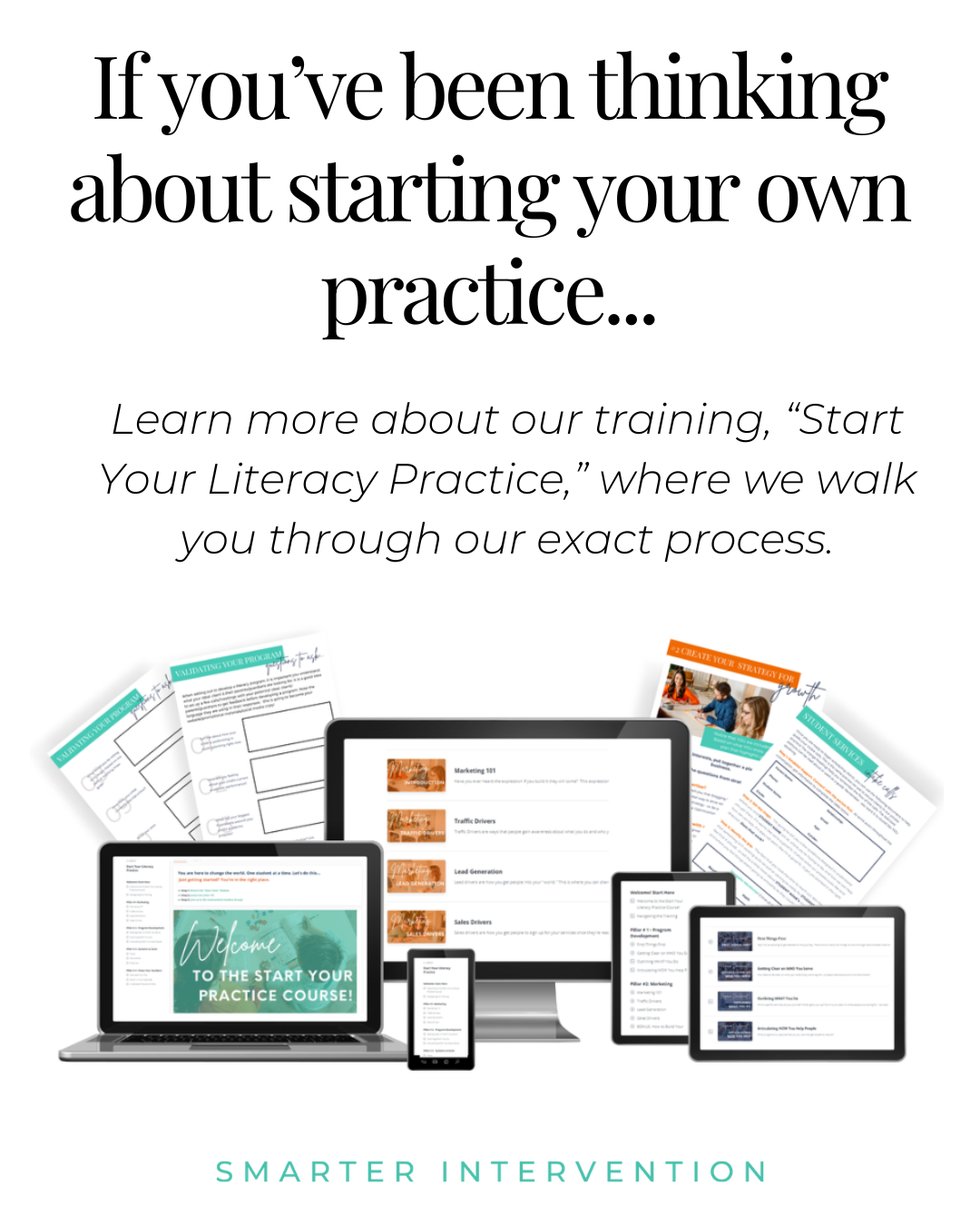
One of the things we do inside Start Your Literacy Practice is spend an entire module on exactly this — figuring out what lights you up so you can build something that actually reflects it. Not just the tactical side of running a practice (though we cover that too), but the deeper work of getting clear on who you are as a practitioner and what you most want to create.
Natalie is a living example of what that looks like when you do the work. She left law because she was ready to make an impact in a different way. She built a studio that looks and feels like her. She noticed what her students needed and created something to meet it. That's not luck. That's clarity.
If you've been thinking about starting your own literacy practice (or if you're already in one and want to make sure it's really aligned with the practice you dreamed of building), I'd love for you to take a look at what we've put together.
Learn more about Start Your Literacy Practice here.
Listen to the full conversation with Natalie in our latest bonus episode on the podcast.
And go give her a follow at @hidden_key_ls. It’s amazing to see what she’s built.