
Tracking Correct Words Per Minute
The most common progress monitoring we tend to do with our kids is tracking how many words per minute they can read. We often start with word lists and quickly move on to text, having the child read as quickly as they can for a 1-minute stopwatch.
Often, this is the only data point we track. I have been there. I tracked every single 1st and 2nd-grade student’s words per minute when I administered DIBELS. This is not in and of itself a problem; in fact, words per minute does help us know if the student will be able to fluently read at their grade level, but it is not the end-all be-all.
We must always keep in mind that we are striving for so much more than words per minute or even fluency. We want our students to comprehend what they are reading, and words per minute does not equal comprehension.
In fact, some of our dyslexic kids will never be able to read at a pace or fluency that will equal grade level, but this does not mean that they cannot comprehend what they are reading.
I am not saying that we should stop tracking words per minute, though, for many of my students, I don’t track this data point. What I am saying is to look more deeply at what is going on with the student.
I have noticed over the years that if a student has been timed over and over again, then they tend to approach reading like a race. They sit down, put their finger on the first word, and start to try to read ahead a bit before you can even tell them what you are working on. They speed through reading as fast as they can, and they are motivated by getting more words per minute, which can be positive, but they also lose out on why they are reading. We are reading to learn information or enjoy a story, not to win a race, and this can quickly get lost.
The flip side to this race-against-the-clock reaction I see a lot is pure anxiety. Many kids who struggle with reading, and who have been tested in one-minute intervals for all of elementary school, sit down with a reading passage in front of them and are overwhelmed with anxiety. This reaction is so hard to see and also does not allow the student to understand why we read, but rather overwhelms them with the pure task of reading.
If our ultimate goal is that a student is comprehending what they are reading, then we need to focus on helping the student understand how to work with what they have, how to take their ability and apply it to reading in a way that allows them to comprehend, even if they are slow readers and non-fluent readers.
Personally, my reading rate is at a 5th-grade level, but this has not stopped me from completing college and graduate school. My comprehension is very strong, but I have to approach reading like a job. I have to use tools and concrete methods to help me stay focused and be an active reader. I stop frequently, reread, look words up, check my understanding, and write down thoughts and questions.
This is all to say reading rate does NOT equal comprehension, and your struggling readers can be strong comprehenders with the right tools and strategies. Click here to read our blog: 6 Tips to Teaching Comprehension.
Final Thoughts
Words per minute can tell us something about a student’s reading, but it doesn’t tell us the whole story. Students also need to read accurately, group words into meaningful phrases, attend to punctuation, and use expression to make sense of what they’re reading. The goal isn’t simply to help students read faster; it’s to help them become readers who understand what they read.
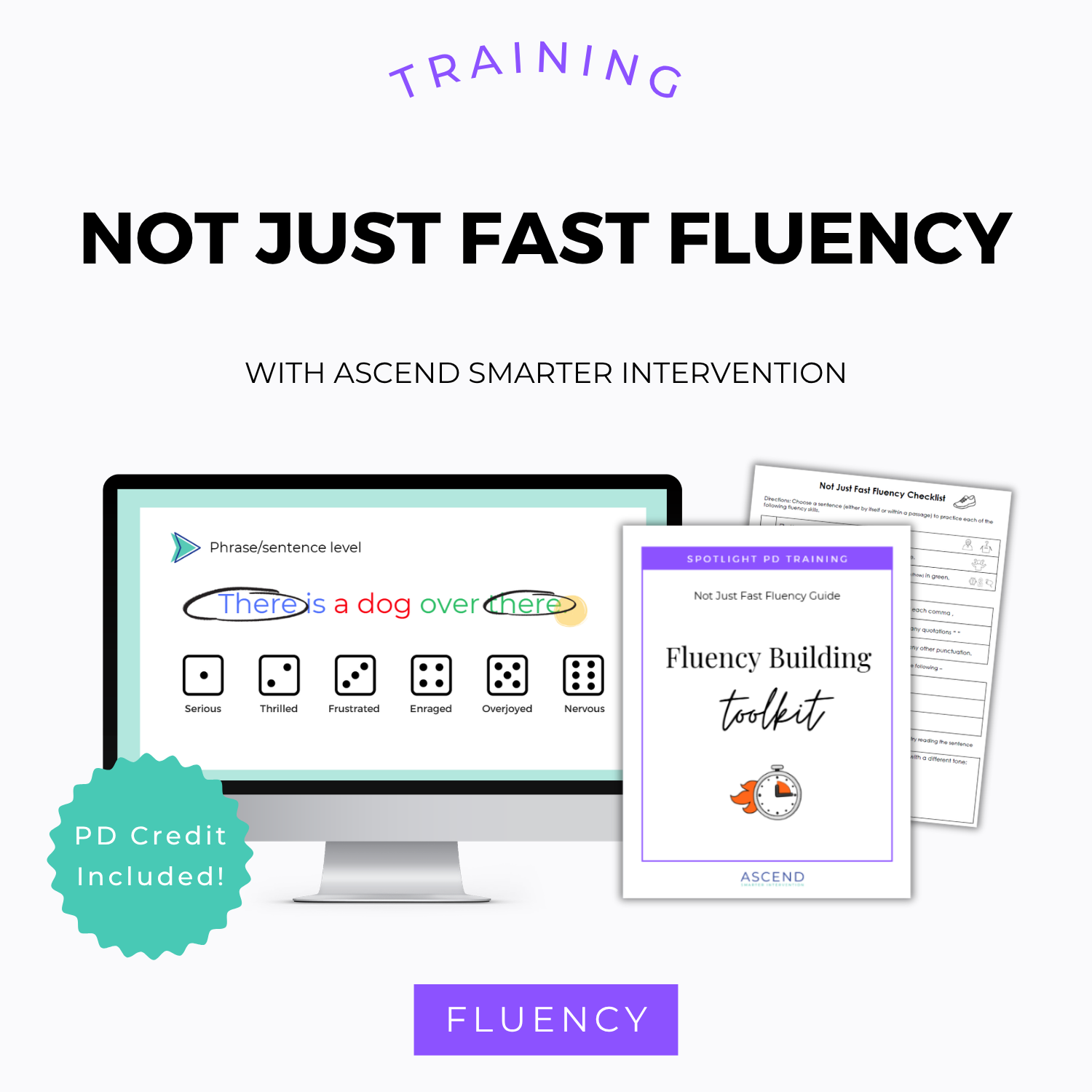
Our on-demand training, Not Just Fast Fluency, gives you a practical four-step routine for teaching the fluency skills that support comprehension. You’ll learn ways to help students develop phrasing, accuracy, self-monitoring, and expression, with strategies you can work into the reading instruction you’re already doing.
You’ll also receive the Fluency Building Toolkit, which includes a one-page fluency checklist, phrasing graphic organizers, punctuation task cards, self-monitoring accuracy cards, expression and character differentiation cards, leveled fluency passages for grades K–6, and grade-level fluency norms and rubrics. The training includes a one-hour PD certificate and lifetime access to the video and materials, giving you practical resources to return to as you help students move beyond reading quickly to reading with meaning.