
Making meaning from text is the ultimate goal of learning how to read.
Most often, comprehension questions are used to determine what students understand about the books they have read.
There are two types of questions that are used: explicit and implicit.
Explicit questions are questions that are explicitly stated in the text; these are considered “right there” questions because students can look back in the text and find the answer stated clearly in black and white.
Implicit questions are not clearly stated in the text, and a student must infer or read between the lines in order to answer these types of questions. This brings the challenge of understanding or making meaning to a whole new level.
Both types of questions are important when assessing a student’s understanding of what they have read. However, we shouldn’t stop there. Comprehending a story should mean more than answering questions and needs to go deeper in order to prepare our students to be critical thinkers and readers.
Do we want to enable our students to only be able to answer questions after reading a text or do we want to prepare them to make meaning from the text?
Questions can often be answered by looking back in the text, not necessarily because the student understood what they read.
To this end, we advocate for comprehension instruction to go beyond questioning and focus on vocabulary development as well as explicit teaching of comprehension strategies such as visualizing and determining the author’s message.
Using Webb’s Depth of Knowledge model to plan for comprehension instruction will help move readers from simply recalling information to applying and using knowledge gained from texts. This is a great resource to use when determining goals or instructional objectives.
One way to begin this work is to get baseline information about a student’s comprehension strategies and vocabulary skills. This can be done using a pre-test that assesses oral reading fluency (as we know, weak decoding and fluency ultimately impact comprehension), in addition to comprehension strategies and word work that measure the ability to use and understand various parts of speech.
A Maze reading test is also a key ingredient in measuring comprehension, as this will assess a student’s understanding of text read silently.
These probes will give information about areas of strength and weakness within a student’s comprehension skills. This can help drive instruction and outline specific goals for comprehension work moving forward.
Final Thoughts
Moving beyond questions to assess comprehension means giving students the tools to think about what they read, connect ideas, and explain their understanding. That takes more than asking the right questions. Students need explicit instruction, modeling, and opportunities to practice the strategies that help them make meaning from text.
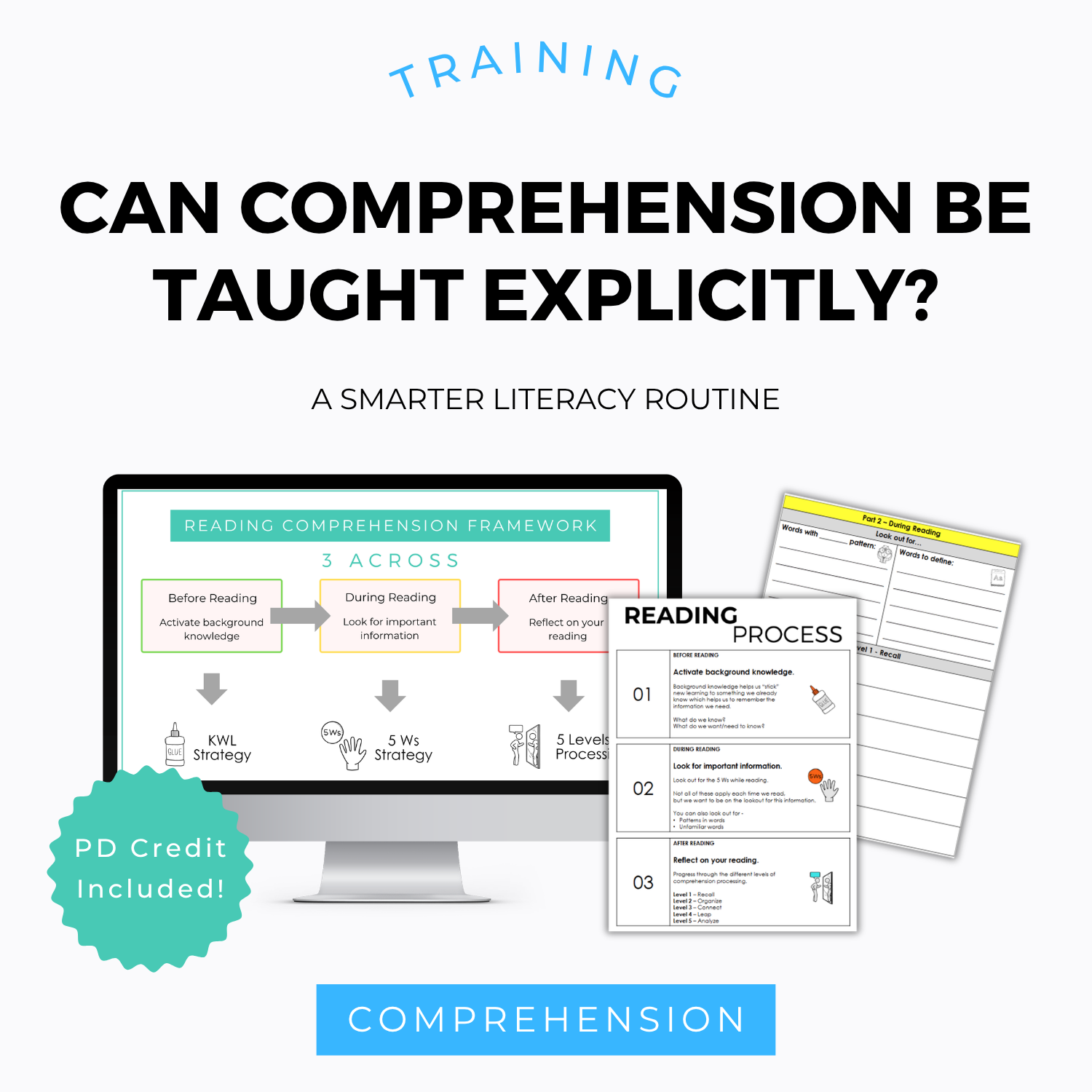
Our on-demand training, Can Comprehension Be Taught Explicitly?, explores how to teach comprehension strategies directly and help students become more independent readers.
You’ll also get instructional materials to support your lessons, a one-hour PD certificate, and lifetime access to the training and resources. It’s a practical way to build on what you’re already doing and give students more support in becoming thoughtful, capable readers.