
Let’s build a literacy intervention plan that fits the students in front of you.
You have the assessments, the instructional strategies, and maybe even a curriculum. But how do you bring it all together for your students?
The 5CCL Learning Lab helps you identify what to prioritize, how to structure targeted instruction, and monitor progress with practical tools and personalized support to help you make it happen.
You know your students.
Pulling it all together is the hard part.
You have the assessment data. You understand the importance of phonemic awareness, phonics, vocabulary, fluency, and comprehension.
You might even have a structured literacy curriculum and a collection of instructional activities ready to go.
But knowing what to teach and figuring out how to bring it all together for the specific students in front of you are two different things.
You're doing your best to make it all work.
But every student needs something a little different.
One student is still struggling to decode multisyllabic words. Another reads accurately but has difficulty understanding what they've read. And a third seems to know the skills during instruction but struggles to apply them independently.
So how do you decide what to prioritize?
How much time should you spend on each skill? Which activities will have the greatest impact? And how do you know when it's time to adjust your plan?
Maybe you've caught yourself thinking:
"I know what my students are struggling with, but I'm not always sure what to focus on first."
or
"I have the data, the curriculum, and the activities. How do I put it all together into a lesson that meets my students' needs?"
Here's what I want you to know:
You're not missing expertise, and you probably aren't missing instructional resources.
What you need is a clear way to connect what you know about your students to what happens during instruction.
A way to identify the most important skills, build targeted lessons around those priorities, and monitor progress so you know when to make adjustments.
Because the goal isn't simply to collect more data or add more activities.
It's to walk into each lesson with a clear plan, knowing why you're teaching what you're teaching and how it connects to your students' individual needs.

What changed things for me…
If you know me, you know I'm a data nerd. I love to collect all of it!
But over the years, I've learned that more data doesn't always mean better instruction. And having more instructional resources doesn't necessarily make planning any easier.
What matters is knowing how to use that information to decide what your students need next.
And here's something else I've learned:
Individualized instruction doesn't mean creating an entirely different lesson plan for every student.
It means identifying the specific skills your students need, recognizing where those needs overlap, and building targeted instruction around those priorities.
Often, what feels like a classroom full of completely different needs can be organized into just a few instructional groups.
And when you have a clear understanding of what each group needs, it becomes much easier to structure your lessons, select meaningful activities, and make adjustments as students progress.
That's what makes differentiated literacy instruction feel manageable. Not doing more, but having a clear plan for what matters most.
5CCL is here to help you focus on those few things that really matter.
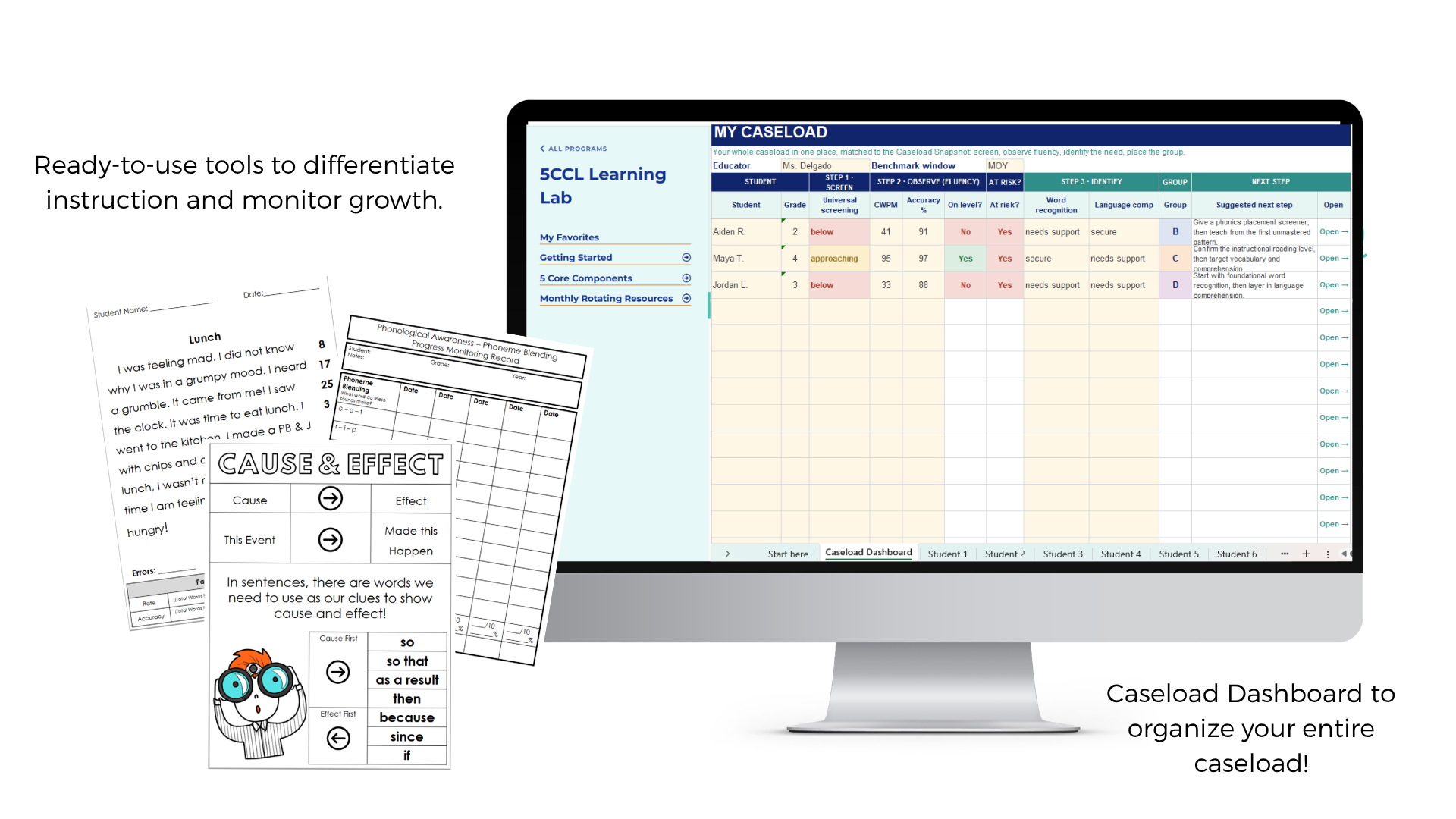
It's about making differentiated literacy instruction manageable, so you can walk into each lesson with a clear plan that meets your students' needs.
Instead of trying to piece together assessment data, instructional strategies, and activities on your own, the 5CCL Learning Lab gives you the tools and support to bring everything together.
With your 5CCL Caseload Dashboard, you can organize the information that matters most, identify your students' primary literacy needs, and recognize where those needs overlap so you can plan targeted instruction.
From there, you'll have access to progress monitoring tools and ready-to-use instructional activities to help you structure your lessons and adjust instruction as your students grow.
And when you're unsure what to prioritize or how to bring everything together for a particular student or group, our monthly Next Step Case Reviews give you an opportunity to work through those questions together.
How it Works
In 5CCL, we start by getting clear on what really matters.
Start with the data you already have! Enter your students' screening results, oral reading fluency scores, and a few quick observations.
The Dashboard helps you identify students who may be at risk, organize students into four instructional groups based on their needs, and see suggested next steps for targeting instruction.
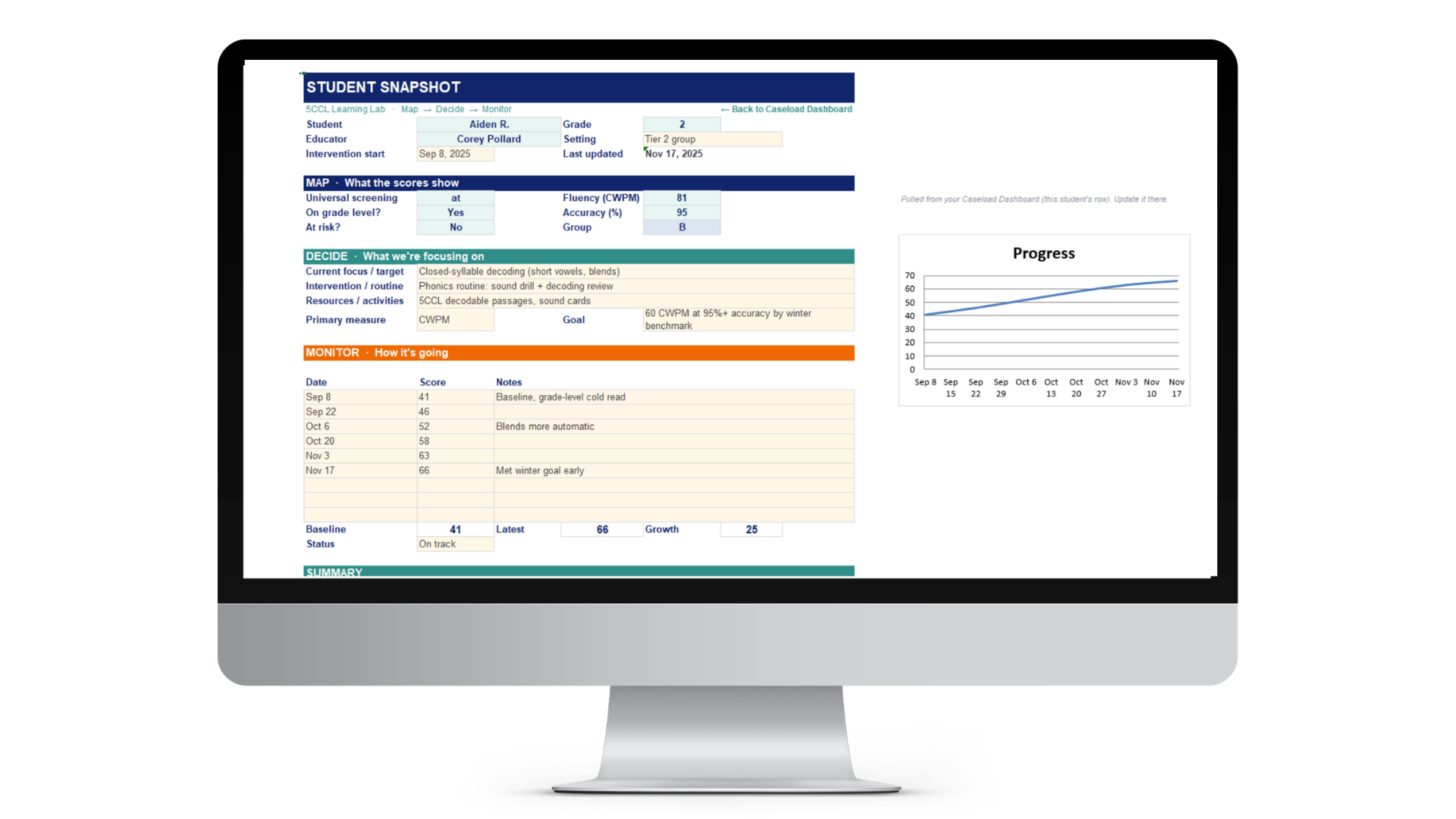
Click below to see how the 5CCL Caseload Dashboard works

And you're not figuring it out alone…
During a recent 5CCL case review, an educator was trying to determine what to prioritize for one of her students.
Was the difficulty with decoding? Vocabulary? Morphology? Comprehension?
As we talked through what she was seeing, we identified another question worth considering: Did the student even recognize when he'd misread a word?
That one question gave her a clear next step for gathering information and determining where to focus instruction.
That's what we want for every 5CCL member.
Not another collection of resources to sort through, but the tools and support to turn what you're noticing about your students into a plan for what to teach next.
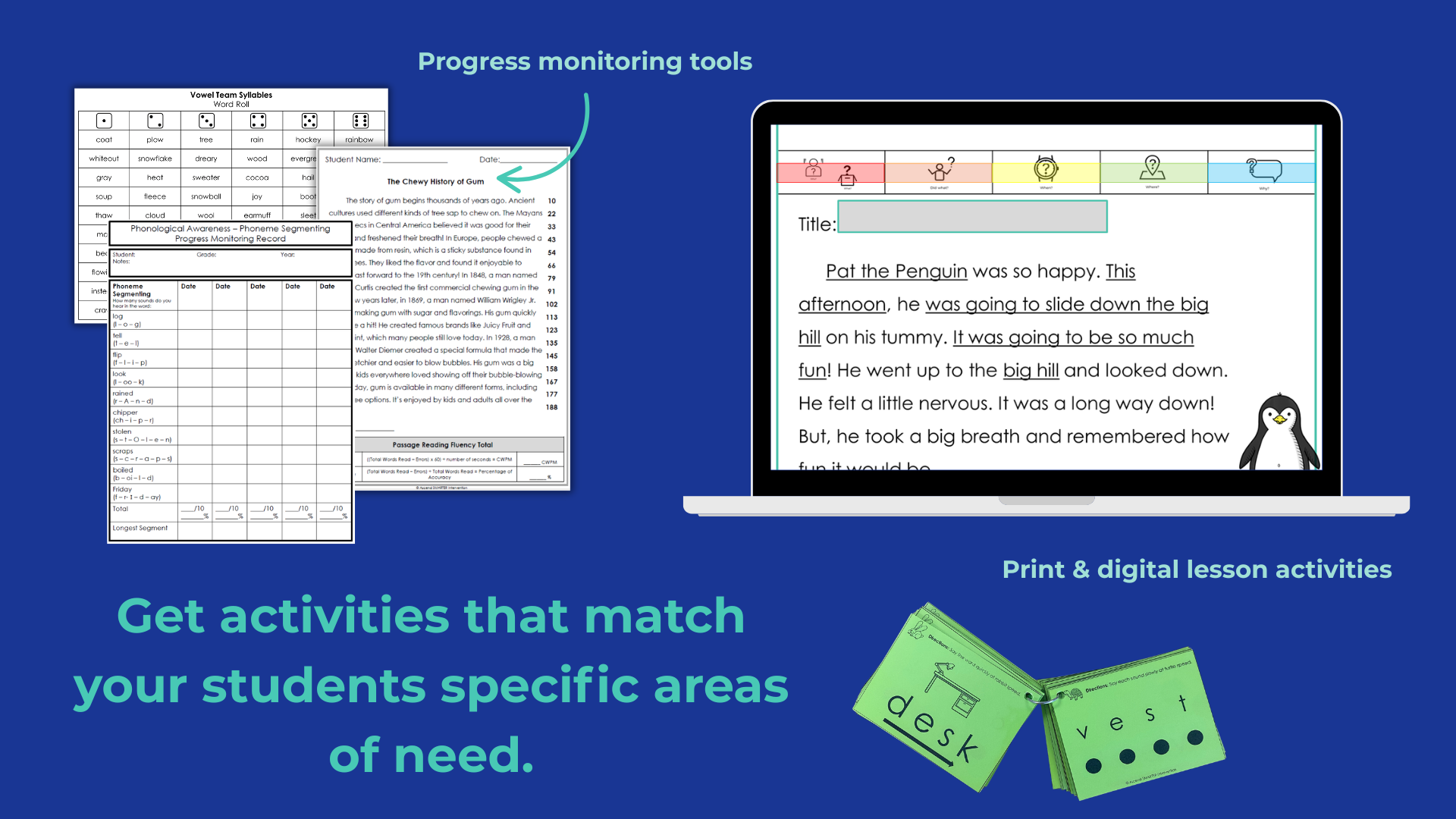
Here’s What You Get:
→ The Caseload Dashboard, with a short training to set it up
→ Student pages that track progress and provide a printable one-page student summary
→ The Progress Monitoring Toolkit with prompts allowing you to track any skill
→ The 5CCL Activity Library, organized by skill
→ Next Step Case Reviews when you're stuck
Built by interventionists who do this work every day.

We built 5CCL because we knew our students well and had plenty of data, but still found ourselves walking into meetings trying to pull together a simple explanation of what we were targeting, why, and whether it was working.
We realized we didn’t need more data or another shelf full of random resources. We needed a simpler way to identify what mattered, choose the right support, and make progress easier to see.
That’s the thinking behind 5CCL:
You don’t need to focus on everything. You need to focus on the right things.
The tools and processes inside the Learning Lab are grounded in more than 20 years of classroom and clinical experience and the real work of supporting students, families, and educators.
What people are saying…
Still Wondering If 5CCL Is Right for Your Caseload? Read This First.
-
Interventionists, special education teachers, and classroom teachers who support students with specific literacy needs, especially anyone who shares ongoing data with families, administrators, MTSS or RTI teams, or IEP teams. It's designed for grades K-8.
-
No. 5CCL helps you decide what to target, track whether it's working, and find materials for specific skills. It works alongside whatever curriculum or intervention program you already use.
-
That's exactly the point. 5CCL doesn't ask you to collect more. It helps you narrow down to the few data points that actually drive instructional decisions and puts them in one place. Most educators start with the screening and fluency data they already have.
-
Probably not, and we won't ask you to replace anything. The Activity Library is there for the moments a student or group needs targeted work on a specific skill and you don't already have something on your shelf.
-
I hear that. Setup takes about 30 minutes with the data you already have. After that, it's a quick check every few weeks, and you get back the time you'd otherwise spend pulling everything together before a meeting.
-
No. Use your universal screener, curriculum assessments, or anything else you already have. If you don't have the data you need, the Progress Monitoring Toolkit has probes you can use.
-
Yes. You can simply request a quote, and we'll send what your administrator or purchasing office needs.
-
Email us within 7 days of joining for a full refund. After that, you can cancel anytime and keep access through the end of your billing period.
-
Yes! You can cancel your monthly plan anytime, no questions asked. You’ll keep access through the end of your billing period.
Let’s get started by focusing on what really matters in your instruction.
No need to collect more data, search for another resource, or wonder whether you’re focusing on the right thing. Join us and use a repeatable process to simplify what you’re already doing and get support when you’re not sure what comes next.