

Something that we are really passionate about in literacy instruction is the need to hit on all 5-Core Components of Literacy in every lesson. Not only do we address these with students as they pertain to reading - but also how they relate to writing.
That being said, one of the most common questions we get is…
How do I teach writing?
Let’s break it down a little bit.
In EVERY lesson that we teach students, we work through the 5-Core Components of Literacy for reading and then go back through each of them for writing. We know that reading and writing are reciprocal processes, so it is CRITICAL that we support the following areas in every lesson.
Phonological Awareness for Writing
When working through phonological awareness for writing, this is where we will target skills like segmenting, auditory discrimination, and sound identification to help prime the brain for spelling and writing.
Phonics for Writing
Phonics is the connection between the orthographic (visual) components and phonetic (sound) components of our language. When we target phonics in our writing instruction, we want students to be able to hear a sound and know exactly what letter/letters make that sound.
This is the portion of our lesson where we complete our auditory drill (for more information on why you absolutely MUST include this in your lesson, click here) before moving into reviewing spelling (to target previously learned concepts) and new spelling to solidify whatever phonogram/concept we are going over that day.
Vocabulary for Writing
When working on vocabulary, we will have students sort words into nouns, verbs, adjectives, and adverbs and then have them pick words to use in a sentence. This way, we can be sure that they are categorizing the words and applying them correctly.
Fluency for Writing
Writing fluency looks like having students practice writing and making it more automatic.
This may look like practicing letter formation and handwriting with our youngest students (and older students if they need it). It may be helping make spelling or sentence-level writing easier and more automatic for students.
Our focus on writing fluency is to make the process of writing easier and more automatic for students. Different children may need different supports here. As the instructor, you can use data from lessons to help determine what areas need the most practice!
Comprehension for Writing
To address comprehension, we will have students complete sentence combining tasks that ask them to take two sentences and combine them into one using a conjunction, without changing the meaning of the sentence. This shows that the students understand the conjunctions and how sentences need to come together.
We will also work through different styles of writing. We explicitly teach them how to write narrative, informative, opinion, and persuasive paragraphs (which can easily be adapted to essays for older students) as well as summaries. Being able to understand the different styles of writing will be critical for them as they navigate school and support their reading comprehension as well.
Now that you know what to target in each area, the question becomes…
How do I pull this all together?
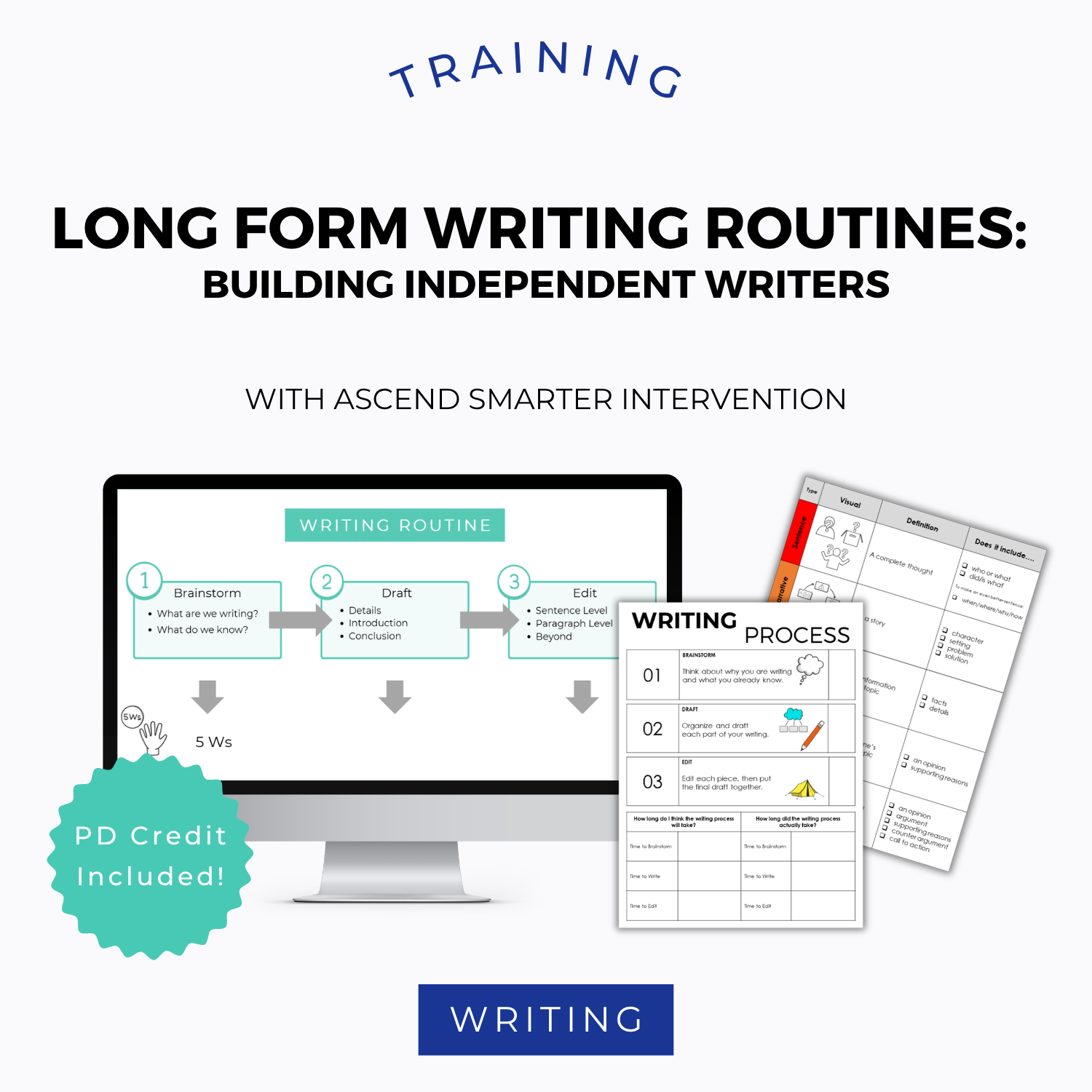
Effective writing instruction gives students more than a prompt and a blank page. They need clear routines, opportunities to practice each part of the writing process, and tools that help them organize their thoughts and turn them into meaningful written work. With the right support, students can become more confident writers and learn to approach longer assignments with greater independence.
If you’re looking for a practical way to bring that structure into your classroom, our on-demand training, Long-Form Writing Routines, walks you through a writing process students can use from planning through revision.
You’ll receive the Long Form Writing Routines Resource Kit, which includes printable and digital tools such as graphic organizers, anchor charts, and a writing rubric. With a one-hour PD certificate and lifetime access to the training and materials, you’ll have resources you can revisit and adapt as your students’ writing needs evolve.