5 Core Components of Reading - Phonics
Hey again friends!

Last week we chatted about the first core component of literacy, Phonological Awareness - if you missed it, you can check it out here!
Today, we wanted to jump into the second core component of literacy.
Phonics
Many educators in the field have a love-hate relationship with phonics. In the sense that some educators love a phonics approach one week and hate it the next (it can be extremely difficult to organize it all for Pete’s sake).
And…some educators LOVE a phonics-based approach, and others hate it in favor of a more whole-language approach.
The research is clear, phonics is a necessary component of effective reading instruction.
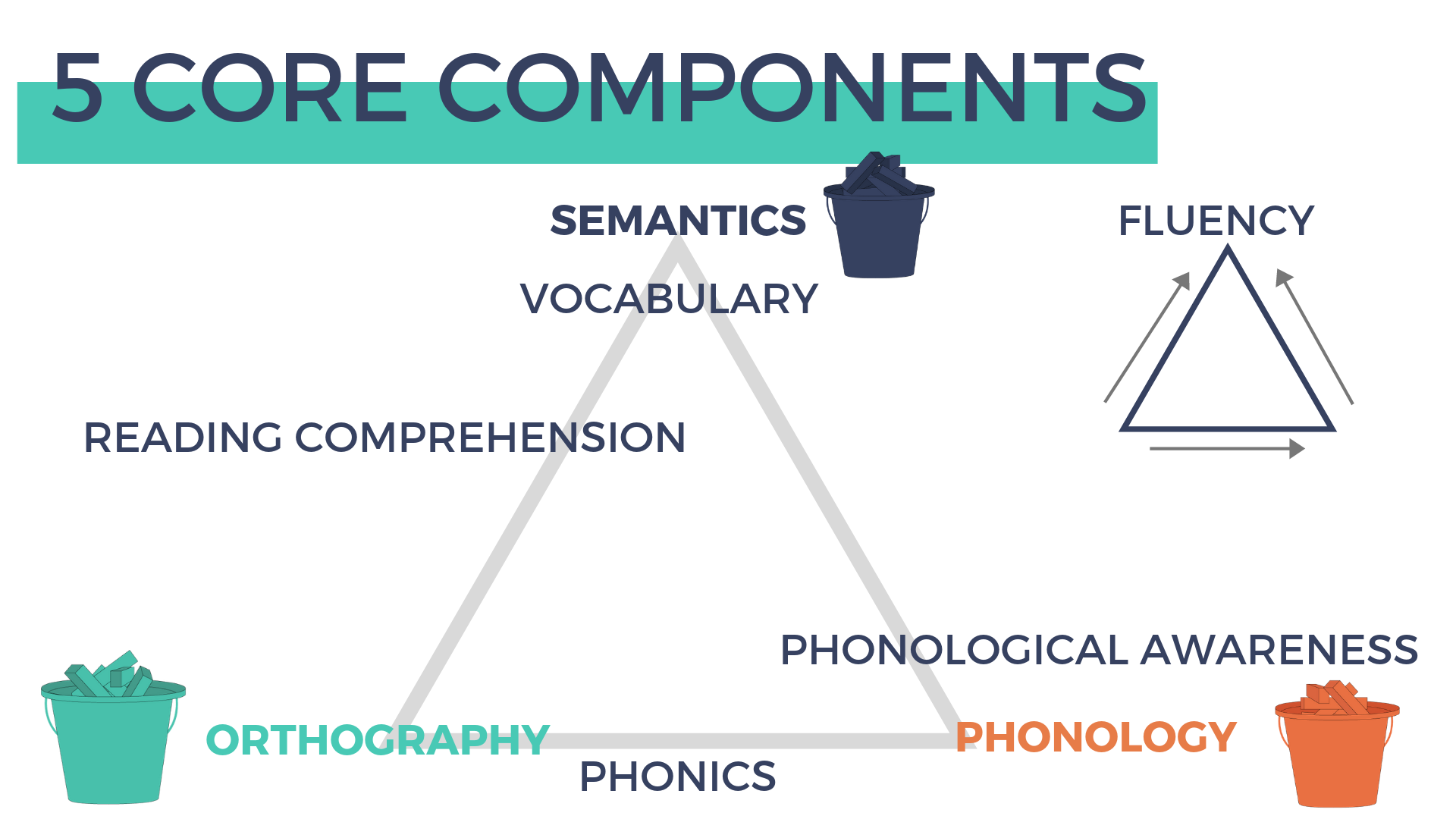
So, going back to the image we shared last week…
We know that the three core areas of neural/brain processing that need to occur to read and write effectively are semantics, orthography, and phonology.
Phonics is simply the connection between orthography (the visual patterns we see) and phonology (the sound patterns we hear) in words.
This is a critical base to the triangle, and therefore, we cannot put together any effective reading program without having phonics instruction tied in.
For our struggling students, we need to make sure not only that we are teaching phonics, but that we aren’t teaching phonics incidentally. Meaning, we have a clear order in which we are going to be teaching the patterns. We call this our scope and sequence. Orton-Gillingham reading instruction has a heavy basis in phonetic patterns and explicit instruction of each of the rules.
As we mentioned with phonological awareness, however, the reason we develop phonics skills is to support reading and writing ability. We don’t work on phonics just to improve phonics. It does not matter how many sound patterns a student knows if they cannot apply those patterns. We work on it as a part of the larger whole.
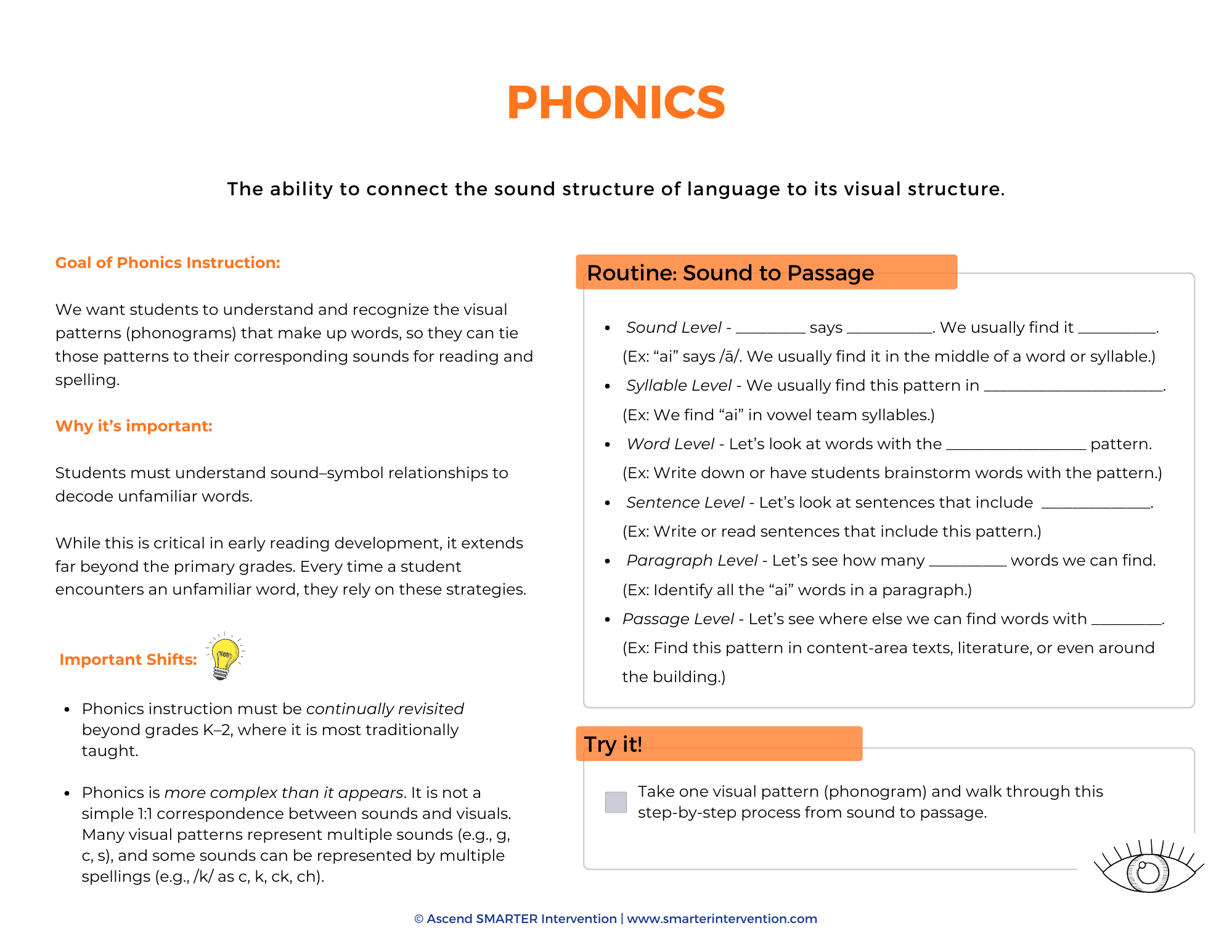
If you want to connect the sound structure of language to the visual structure, try our FREE phonics routine. This routine gives you an easy-to-follow process to help students understand sound–symbol relationships. And it can be used with any program!