How to Stop Letter Reversals
Hey there, friends,
We know this topic is a hot one because so many of our students struggle with this.
Letter Reversals
We all know that this can be such a sticking point for our dyslexic kiddos. It's important to note that many students display difficulty with b/d until the end of second grade or about the age of 8. By the time a child is 8 years old, the dreaded b/d reversal should be pretty much gone.
However, many of our students continue to struggle with b and d, and sometimes even p and q, long after their peers have figured out those crazy letters. There are many tips and tricks to tackle these reversals.
The important thing to note is that most often these reversals are caused by difficulty with orthography - recognizing the letter and processing it from a visual perspective to a language output perspective.
Do different fonts work better for children with dyslexia?
Different fonts have been widely touted as the best way to help dyslexic students discriminate between B/D, but unfortunately, the difficulty goes beyond just the visual presentation and dives deeper into the language centers of the brain. So, if a different font works, great, but really, we would like to see students begin to generalize b/d/p/q knowledge regardless of the font.
We use this letter reversal visual to support our dyslexic students
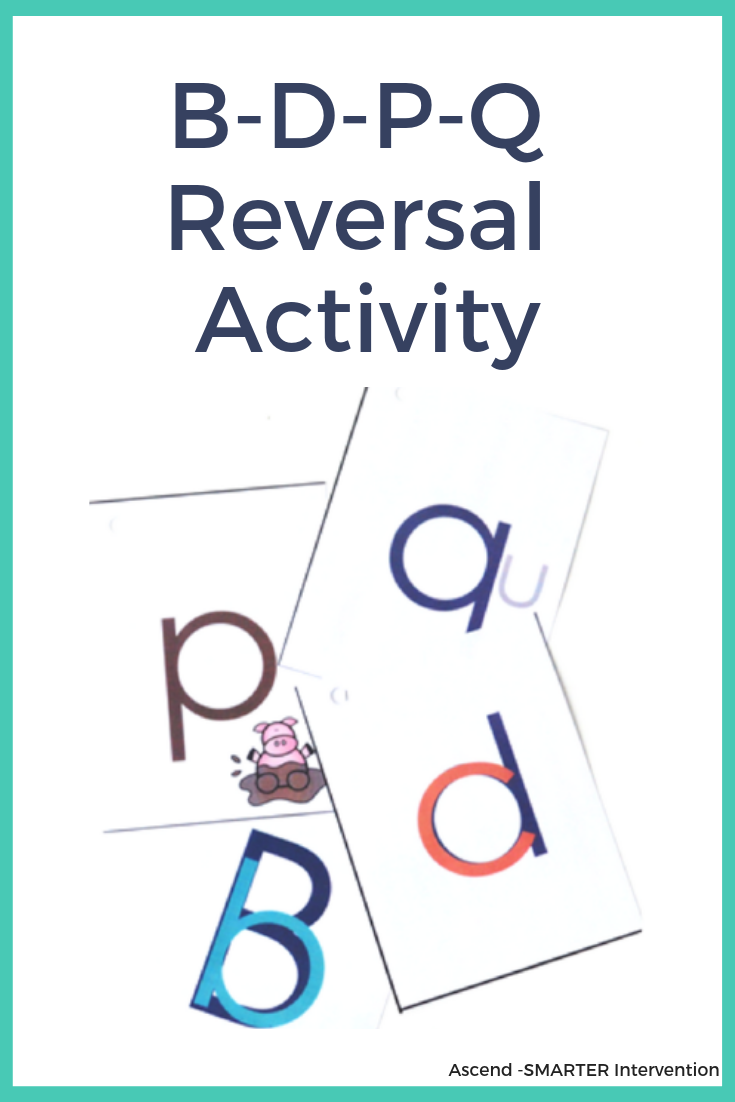
This FREE visual helps to help solidify the tricks we use in our sessions. It all comes down to letter formation, so when we are writing a "b," we start at the top, down to the bottom, and around. We can add an extra bump at the top to see if our lowercase b turns into an uppercase B. If so, we've got it right.
We can use this trick for reading, too, by simply asking the student to add the upper bump to determine if they have a B or D. A "c" always turns into a "d." Again, letter formation needs to be correct for this to work. If the student can find a c in the letter, they have a "d." We usually use the phrase “Magic c turns into d” to help students remember this.
For "p," we have a visual in which the pig digs down into the mud. Because pigs are digging our line should be dropping below the bottom line of the writing paper. A "q" should always be hugging or reaching out to his best friend "u." This visual can be laid out during a session to help provide a visual anchor for students.
So while this is a really simple visual to help students out, we often hear -
My student has tried visuals before, and it’s still not sticking. What do I do?
First things first, make sure the visual is meaningful in multiple ways. We often hear that students are being taught a “BED” acronym and finger trick - which is great, but unfortunately, it doesn’t translate or generalize to actual reading or writing very well (at least not for dyslexic students).
The reason we like using these visuals is because we use them to anchor handwriting. Before a student reads any words, we ask them to go through and identify Bs vs Ds, for example, by having them try to pencil in the upper case B or trace the C in a “C turns into a D” letter. That way, before the student makes an error, they’ve already had to APPLY the skill we’ve taught them in their own reading. If a student is writing, we teach them to make their B starting at the top of the letter and to write a D starting at the midpoint and repeating “C turns into a D.”
This seriously works….we’d love for you to try it by grabbing this totally free resource over here!!! Do you have any other amazing tricks? We’d love to know - you can drop a comment below because it seriously takes a village!
Then, be sure to continue writing practice with the FREE Writing Routine. It walks students through each step of the writing process, helps them organize and express their ideas clearly, and makes your teaching simple. Students can use this process again and again, no matter what kind of writing assignment they are working on.