Executive Functioning: Task Initiation

Have you ever sat down to work and realized it took longer than expected to actually get started?
Or asked a student to begin an assignment, only to return later and find that nothing has been done?
This experience is incredibly common, and it often gets labeled as procrastination, avoidance, or lack of motivation. In reality, it reflects a breakdown in an executive functioning skill called task initiation.
What Is Task Initiation?
Task initiation refers to the ability to begin a task efficiently and independently.
This applies to tasks of all kinds, including:
Starting classwork
Beginning homework
Transitioning between activities
Initiating multi-step projects
When students struggle with task initiation, it is rarely because they don’t care. More often, they don’t yet have the structure they need to start.
Why Task Initiation Lives in Planning
Within our 5-Step Executive Functioning Framework, task initiation falls under Step 4: Planning. Initiation typically breaks down when students don’t know where to start, feel overwhelmed by the task, can’t picture what “done” looks like, don’t have materials ready, or are unsure how much effort or time is required
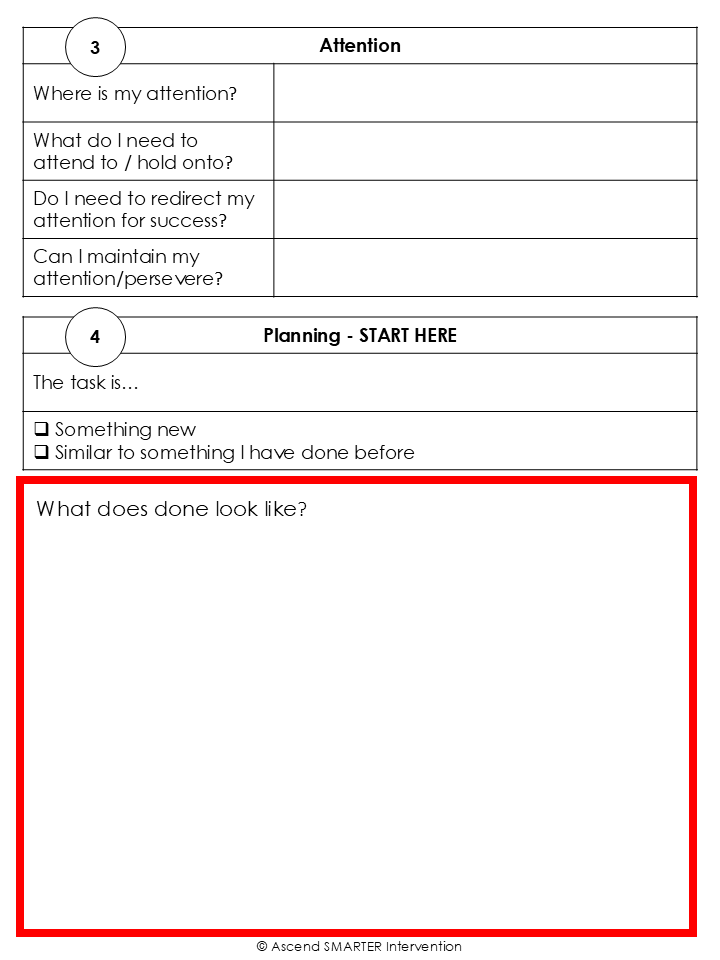
If those questions aren’t answered, asking students to “just start” is asking them to push through uncertainty, something executive functioning struggles make especially difficult.
Initiation Starts With Visualizing “Done”
One of the most effective ways to support task initiation is to start with the end in mind. Before asking students to begin, we help them clarify:
What does “done” look like?
How will I know I’m finished?
What should the final product include?
When students can visualize the endpoint, the task becomes more concrete and less intimidating.
Breaking Tasks Into Actionable Steps
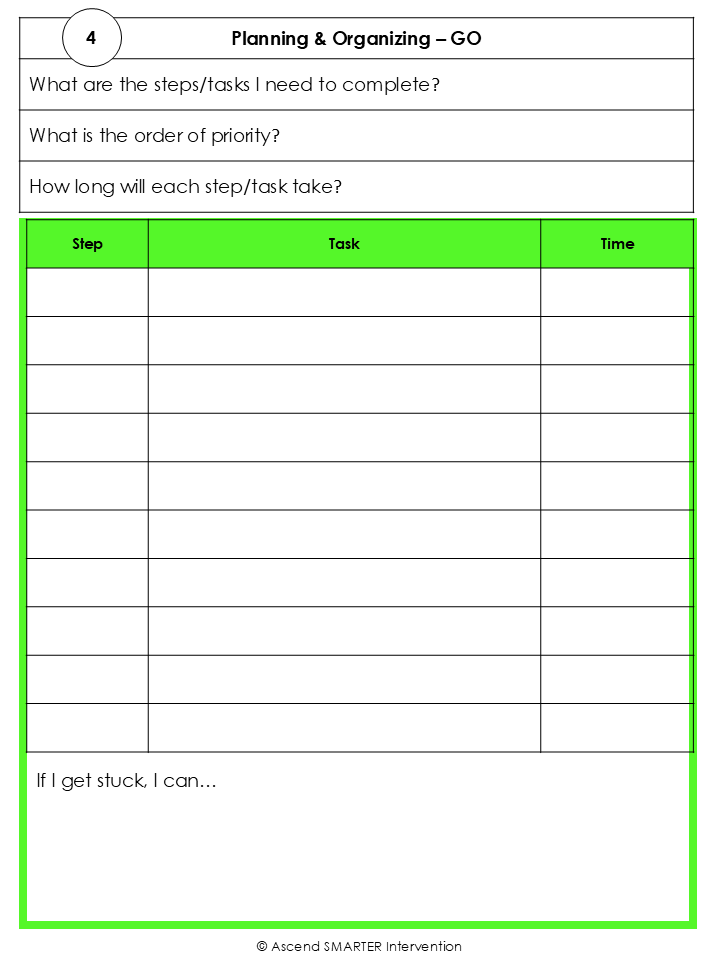
Once “done” is clear, the next step is planning the process.
This includes:
Breaking the task into smaller steps
Identifying the order of those steps
Estimating how long each step will take
For example, a large research assignment might be broken down over several days:
Day 1: Gather sources and take notes
Day 2: Create an outline
Day 3: Draft body paragraphs
Day 4: Write the introduction and conclusion
Day 5: Revise and edit
Breaking tasks down serves three important purposes:
It makes the task feel manageable
It creates natural check-in points
It builds momentum as steps are completed
Momentum is often what unlocks task initiation.
Getting Ready to Start: Materials Matter
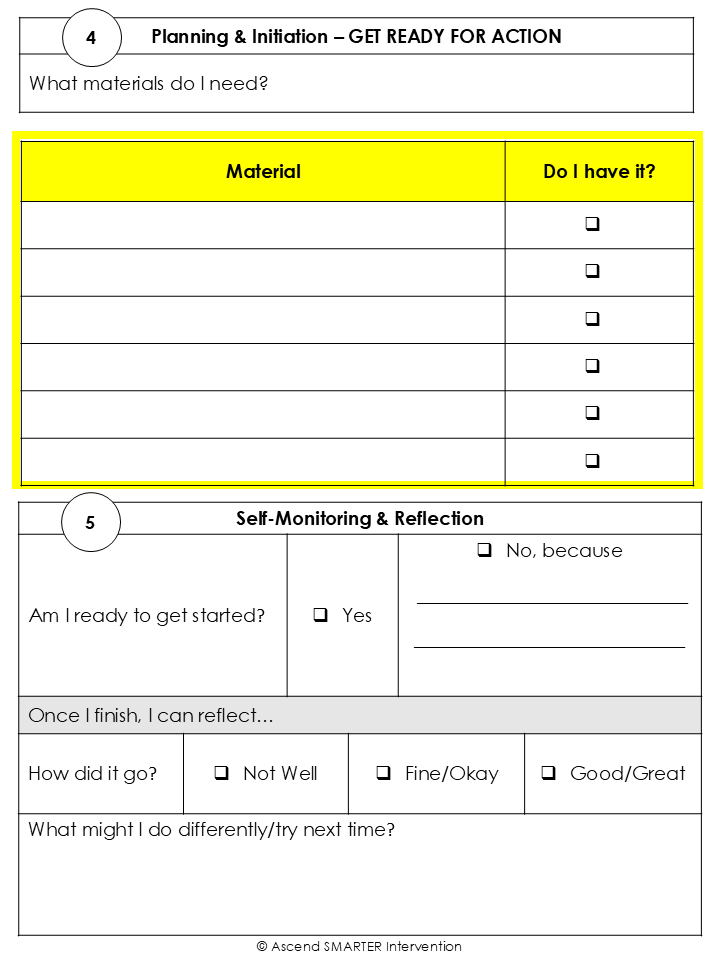
Another common barrier to initiation is not having what’s needed to begin.
Before starting, students benefit from identifying:
What materials are required
Whether those materials are accessible
What needs to be gathered first
When materials are ready, initiation becomes much more likely. When materials are missing, students often stall without knowing why.
Planning for “Getting Stuck”
Students who struggle with task initiation also benefit from knowing what to do if they get stuck.
Rather than stopping entirely, they can be taught to:
Reread directions or the rubric
Ask a specific question
Take a short, time-limited break
Check their plan and return to the next step
Having a plan for getting stuck reduces anxiety and increases follow-through. In practice, our task initiation process follows a simple sequence: visualize “done,” plan the steps, gather materials, and then go.
Want a simple way to support this process?
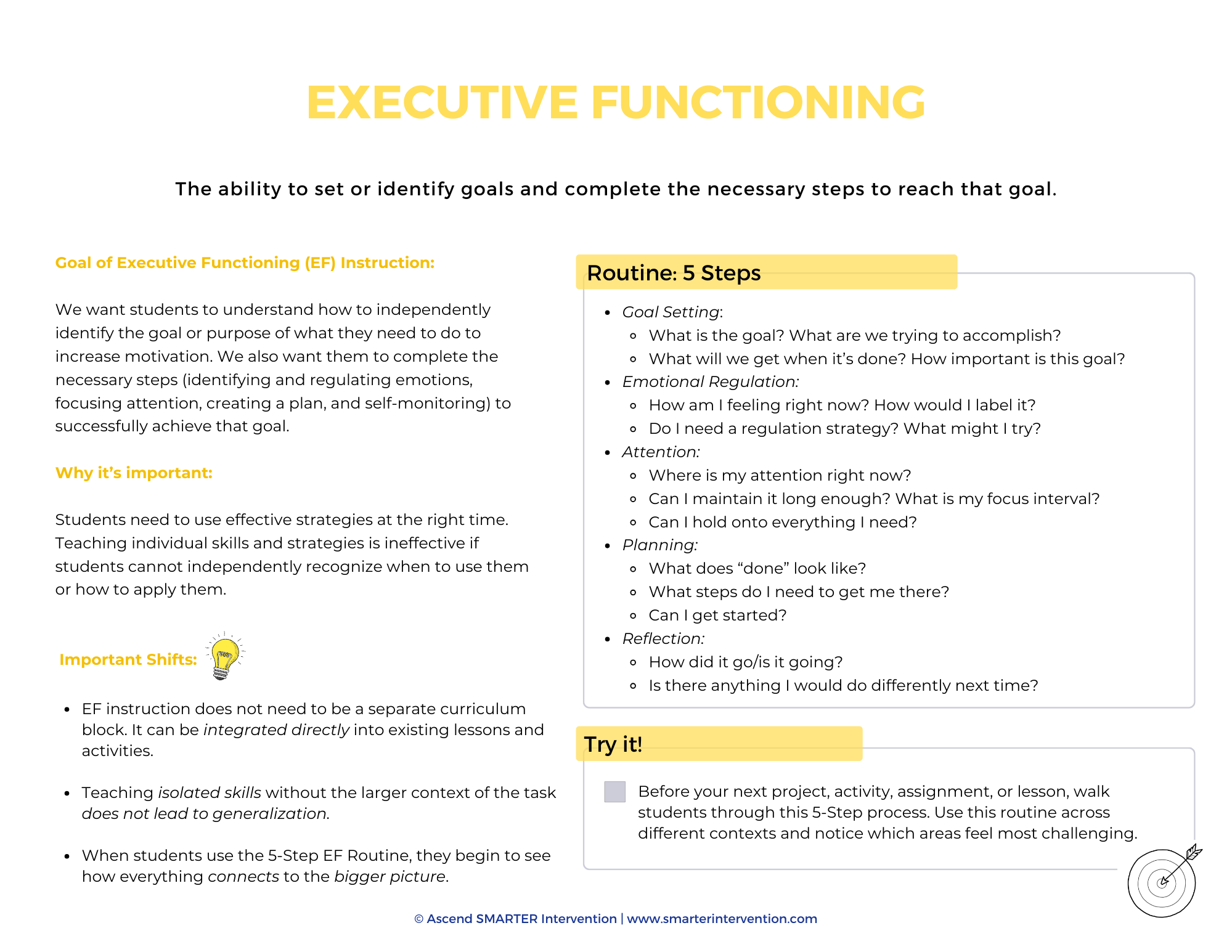
Check out our FREE Executive Functioning Routine!
In this guide, we:
Break down goal setting, emotional regulation, attention, planning, and reflection into steps
Explain the importance and goal of including EF in your instruction
Provide simple steps and prompts you can use with your students
This routine is designed for educators who are ready to take this knowledge into practical, grounded implementation.